


About myelodysplastic neoplasms (MDS)
Mutations in cells occur all the time but your body has clever ways of stopping these changes that cause problems. The longer you live the greater chance these mutations happen. That is why MDS is more common as you get older.
In MDS, abnormal bone marrow stem cells (called blast cells) make large numbers of immature blood cells. These cells do not grow properly and often die early. This results in lower numbers of:
- red blood cells
- white blood cells
- platelets.
The blood cells that do survive are abnormal in shape (dysplastic) and are unable to work properly. This means that people with MDS often have a very active bone marrow but low numbers of working blood cells. Without enough red blood cells, white blood cells and platelets you can be fatigued, get more infections, and bleed and bruise easily.
While MDS can occur at any age, most people are over the age of 60. MDS can occur very rarely in children. The exact number of people who have MDS is not known. This is because in many people it develops slowly and they have no symptoms for some time.
Who gets MDS?
- 1600 Australians diagnosed each year
- 92% of people diagnosed are over 60 years of age
- 77 years is the average age at diagnosis
Causes of MDS
Why mutations happen in the bone marrow and cause MDS is usually unknown.
In most cases, there is no specific cause of MDS. It is either:
- primary where there is no known cause
- secondary (treatment-related) where a person diagnosed has had prior chemotherapy and/or radiation therapy. Only 5-10% of people with MDS have treatment-related disease.
Some factors that may increase the risk of developing MDS:
- genetic mutations increase with age
- exposure to high levels of some environmental chemicals, especially benzene and petroleum products
- exposure to chemicals in tobacco smoke
- previous treatment for cancer or other conditions with chemotherapy
- previous radiation therapy, or accidental exposure to high levels of environmental irradiation
- some congenital disorders such as Bloom’s Syndrome, Down’s Syndrome, Fanconi anaemia and neurofibromatosis.
Symptoms of MDS
Many people with MDS have no symptoms at all and it is found during a routine blood test. In other people they have many symptoms and present to the doctor. Symptoms depend on how severe their disease is and the type of blood cell most affected.
Common symptoms of MDS
Anaemia (low red blood cells):
- tiredness and fatigue
- weakness
- shortness of breath
- looking pale
Abnormal white cells (with low white cell counts):
- frequent infections
- fevers
- sore mouth/mouth ulcers
Abnormal platelets (with low platelet counts):
- easy bruising
- purpura, a rash of small red dots (often on the lower limbs first)
- bleeding from the nose and gums
Some terms you may encounter
Anaemia
- Low red blood cells (RBC) or haemoglobin (Hb)
- Symptoms include tiredness, pale skin, shortness of breath, heavy legs, feeling lightheaded, rapid or irregular heartbeat.
Leukopenia
- Low white blood cells / neutrophils (WBC)
- Symptoms include frequent or severe infections, fevers, shivering, chills, low blood pressure, mouth ulcers.
Thrombocytopenia
- Low platelets
- Symptoms include easy bruising and bleeding, petechiae – tiny unraised red blood spots under the skin.
Pancytopenia
- All three blood cell types are low
- Symptoms can be from all three conditions above.
It is important to see your doctor if you have any symptoms that do not go away.
Diagnosis of MDS
MDS is diagnosed from a number of tests. These include:
- medical history and physical exam
- blood tests – full blood count (FBC), kidney and liver function, electrolytes
- bone marrow biopsy
- genetic tests.
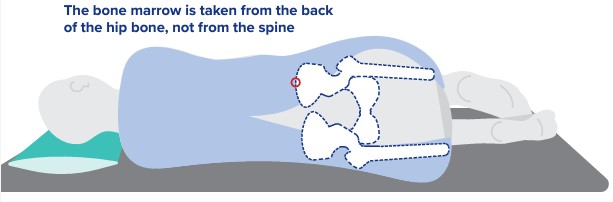
Types of MDS
There are different types of MDS. People with mild disease often have low red blood cells, or low white blood cells, or platelets. In more severe cases all these blood cells are low.
The World Health Organisation’s classification system details the subtypes of MDS. Knowing the type of MDS you have is important, it helps your treatment team decide the best type of treatment.
The World Health Organization (WHO) classification system (2022)
The WHO classification system uses the new term, myelodysplastic neoplasms (MDS). This system divides MDS into 2 groups:
This classification sorts MDS on mutations or genetic abnormalities. These are found through cytogenetic tests which look at the structure of chromosomes (DNA) in your bone marrow cells.
Blast cells don’t function properly and crowd the bone marrow. this restricts the bone marrow in producing healthy functioning blood cells.
MDS with low blasts and isolated 5q deletion (MDS-5q)
- Blasts: <5% bone marrow and <2% peripheral blood
- Cytogenetics: 5q deletion alone, or 1 other abnormality (other than monosomy 7 or 7q deletion)
MDS with low blasts and SF3B1 mutation (MDS-SF3B1)
- Cytogenetics: absence of 5q deletion, monosomy 7, or complex karyotype
- Mutations: SF3B1, detection of >15% ring sideroblasts may substitute for SF3B1 mutation
MDS with biallelic TP53 inactivation (MDS-biTP53)
- Blasts: <20% bone marrow and peripheral blood
- Cytogenetics: usually complex
- Mutations: 2 or more TP53 mutations, or 1 mutation with evidence of TP53 copy number loss or cnLOH
MDS with low blasts (MDS-LB)
- Blasts: <5% bone marrow and <2% peripheral blood
MDS, hypoplastic (MDS-h) – <25% age adjusted bone marrow cellularity
- Blasts: Not applicable
MDS with increased blasts (MDS-IB1)
- Blasts: 5-9% bone marrow or 2-4% peripheral blood
MDS with increased blasts (MDS-IB2)
- Blasts: 10-19% bone marrow or 5-19% peripheral blood or Auer rods
MDS with fibrosis
- Blasts: 5-19% bone marrow; 2-19% peripheral blood
Your treatment team will discuss your type of MDS and your treatment options.
Prognosis of MDS
The risk of your MDS progressing into acute myeloid leukaemia (AML) and your life expectancy can be checked by your treatment team. The score is calculated using the International Prognostic Scoring System – Molecular (IPSS-M) risk calculator. Your treatment team will put your test results into the calculator.
International Prognostic Scoring System – Molecular (IPSS-M) risk calculator
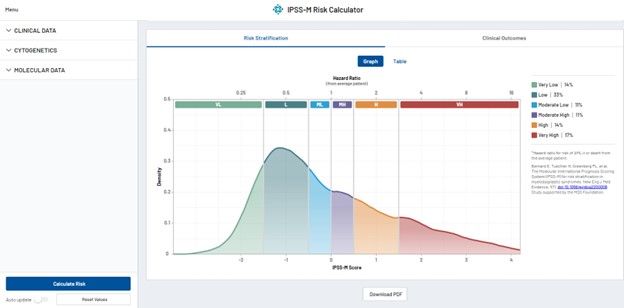
The International Prognostic Scoring System – Molecular (IPSS-M) risk calculator for MDS predicts the potential risk of MDS transforming to AML and overall survival (life expectancy) is calculated into:
- very low
- low
- moderate low
- moderate high
- high
- very high.
Your treatment team will discuss your risk score and treatment options.
Signs that the MDS is progressing (transforming) may include:
- frequent infections
- bleeding
- bruising
- frequent blood transfusions.
Treatment of MDS
Your haematologist will recommend treatment based on:
- the type of MDS you have
- your age
- your general health
- your prognosis
- your wishes.
Watch and wait (active observation) involves regular monitoring. This includes blood tests and general health. No treatment is needed unless you develop signs and symptoms.
Supportive care manages symptoms of MDS and aims to improve your quality of life. It is often used if you are older or if you have other health problems. Supportive care does not aim to treat the disease. It can help with symptoms like shortness of breath, bruising or bleeding.
Supportive care therapies include:
- blood transfusions to reduce symptoms like shortness of breath, dizziness and fatigue
- platelet transfusion reduces the risk of bleeding
- antibiotics can prevent some infections
- iron chelators help remove extra iron from your body, you may need this if you have regular blood transfusions.
Targeted therapy works on the mutations/changes inside blood cancer cells. It also slows down blood cancer cell growth or speeds up the rate the cells die. For MDS it works in several ways:
- immune system modulators boost your immune system to attack and destroy cancer cells
- angiogenesis inhibitors block your blood vessels growing so cancer cells can’t grow and spread
- cancer growth inhibitors kill or stop the growth of cancer cells.
Lenalidomide is a targeted therapy. It is a tablet usually taken once a day for 21 days and then one week off. It can be taken long term.
The goal of targeted therapy for MDS is to reduce your need for blood transfusions. Your doctor will discuss the best treatment for you.
Common side effects:
- constipation and/or diarrhoea
- nausea
- fatigue
- cough
- feet and hand swelling
- body aches and pains
- headache
- stomach pain
- rash
- low blood counts
- risk of infection
- bleeding
- change of taste and smell.
Chemotherapy (chemo) means therapy with chemicals. Chemo is also called cytotoxic because it kills cells. It especially kills cells that multiply quickly like cancer cells. Chemo is used in MDS to reduce the number of blast cells in your bone marrow. Then normal stem cells can make red blood cells, white blood cells and platelets.
There are a few types of chemo that treat MDS. It is either given orally, subcutaneously (needle under the skin) or intravenously (IV).
Low intensity chemo
Low intensity chemo may be given if you have intermediate or high risk MDS.
Decitabine and cedazuridine is an oral chemo. It blocks the genes that help cancer cells grow and helps genes to produce normal cells. It is usually taken once a day for 5 days every month for six months.
Azacitidine is also a low intensity chemo. It works on the genes that affect how your blood cells develop. It is a subcutaneous (under the skin) injection. It is usually given in a clinic or outpatient ward, in the stomach or thigh. Each month the chemo injection is given either:
- 7 days in a row
- or five days in a row, then a 2 day weekend break, then the next two days
It may take up to six months to work and can be given long term.
The aim of low intensity chemo is to:
- improve MDS symptoms
- reduce the need for blood transfusion
- decrease the time spent at treatment appointments
- improve your quality of life.
High intensity chemotherapy
If you have high risk MDS you may have the same chemo as people with acute myeloid leukaemia (AML). High intensity chemo is larger doses of strong medication with more side effects. It is given to you in hospital intravenously (IV) over days or weeks. Sometimes it is called high dose or induction chemo, its goal is remission.
Remission means killing a large number of the unhealthy (dysplastic) cells from the bone marrow. The aim is to help your bone marrow to work normally.
Chemotherapy side effects
You may have no side effects or many, and they may change. There are medications and ways to manage side effects. Your treatment team will monitor your side effects.
Common side effects:
- frequent infections
- nausea and vomiting
- change of taste and smell
- mucositis
- constipation and/or diarrhoea
- fatigue
- chemo brain (foggy brain)
- body aches and pains
- sun sensitivity
- rash
- numbness tingling in hands and feet
- hair loss or thinning (high dose chemo).
A stem cell transplant (bone marrow transplant) is where your stem cells are replaced with new stem cells after high dose chemotherapy and/or radiation therapy. An allogeneic stem cell transplant is used in MDS. You may have a transplant if your MDS gets worse or does not respond to treatment. This treatment is not available for everyone because there are very serious side effects, including a risk of dying.
Allogeneic (donor) stem cell transplant
The stem cells transplanted in an allogeneic transplant are from a donor. Usually, a brother or sister with the same tissue type as you. A human leukocyte (HLA) blood test can see if they are the same tissue type. The stem cells can also come from a volunteer donor who is not related but are a match.
In an allogeneic stem cell transplant the donated stem cells create a new immune system. The new immune system destroys any blood cancer cells left after the high dose chemo. The healthy donated stem cells also rebuild your blood.
Common side effects:
- low blood counts
- all the same side effects as chemo, but more severe
- graft-versus-host disease (GvHD), a condition where the new immune system attack normal cells.
Myelodysplastic/myeloproliferative neoplasms (MDS/MPN)
These are a group of rare cancers that have characteristics of:
- myelodysplastic (abnormal bone marrow cells producing too few blood cells) and
- myeloproliferative (abnormal bone marrow cells producing too many blood cells) neoplasms.
Myelodysplastic/myeloproliferative neoplasms may progress to acute leukaemia. There are generally 3 types:
- Juvenile myelomonocytic leaukaemia (JMML) is an uncommon childhood blood cancer that has overlapping features of myelodysplastic/ myeloproliferative neoplasms (MPN)
- Chronic myelomonocytic leukaemia (CMML) is similar to JMML but commonly occurs in older adults
- Atypical chronic myeloid leukaemia (aCML) has been renamed in the fifth addition of the WHO classification to MDS/MPN with low neutrophils
Treatment depends on the characteristics of each blood cancer.
Monitoring MDS
Your treatment team will arrange regular check ups. They will monitor your MDS including tests to check your blood cell levels. If you notice symptoms you should tell your treatment team as soon as possible.
Living with MDS
How MDS affects your everyday life will depend on many factors. Managing side effects like fatigue or your emotional health are important, and it can be hard to ask for the help you need. There are some helpful resources and information on this page Living well with blood cancer – Leukaemia Foundation.
To speak to a Leukaemia Foundation Healthcare Professional call 1800 620 420 or get in touch via email at [email protected].
Caring for someone with MDS
We have a range of information and resources that may help when you are caring for someone with myelodysplastic neoplasms (MDS).
Resources for MDS
Booklets to download:
The CLL booklet has been translated into the following languages:
Optimal Care Pathway for MDS
An Optimal Care Pathway for MDS has been developed in association with the Cancer Council, Australia and you can access it below.
Your Guide to Best Cancer Care – for myelodysplastic neoplasms (MDS) patients
A guide to help you, your family, and friends as you navigate through the healthcare system
References
- Molecular International Prognostic Scoring System for Myelodysplastic Syndromes | NEJM Evidence
- IPSS-M Risk Calculator (mds-risk-model.com)
- The 5th edition of the World Health Organization Classification of Haematolymphoid Tumours: Myeloid and Histiocytic/Dendritic Neoplasms (mll.com)
- The New WHO Classification 2022 | MLL
- Cells | Free Full-Text | Molecular Drivers of Myelodysplastic Neoplasms (MDS)—Classification and Prognostic Relevance (mdpi.com)
- Allogeneic Hematopoietic Cell Transplantation Improves Outcome in Myelodysplastic Syndrome Across High-Risk Genetic Subgroups: Genetic Analysis of the Blood and Marrow Transplant Clinical Trials Network 1102 Study – PMC (nih.gov)
- Myelodysplastic disorders | eviQ


