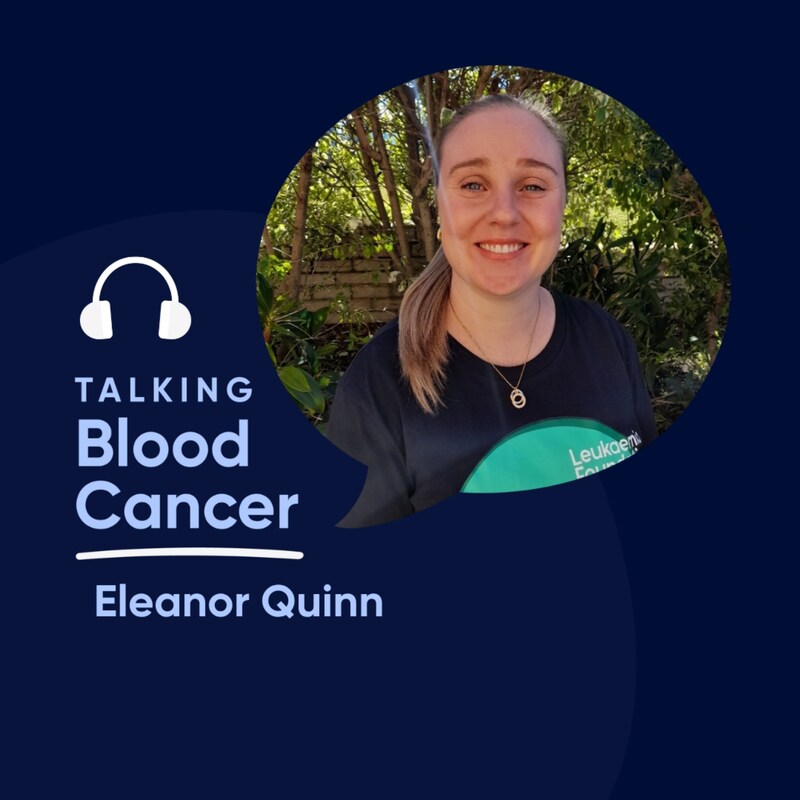
In this episode of the Talking Blood Cancer podcast, host Kate Arkadieff welcomes Eleanor Quinn, a supportive care case manager and dietitian with the Leukaemia Foundation. They explored nutrition and wellbeing for those affected by blood cancer, offering insight from both a healthcare professional and support perspective.
Eleanor discusses the unique pressures that patients, carers, and families can feel when it comes to eating well during a blood cancer diagnosis and treatment. She addresses common myths and misunderstandings about food, emphasising that there is no one food or diet that can cure or prevent relapse of blood cancer. They discuss how overwhelming “food noise” from social media and well-meaning advice can be, and the importance of seeking reliable guidance from qualified dietitians when needed.
Sharing practical advice for managing nutrition during treatment. They also touched on the financial challenges many face with the rising cost of food, providing tips for nutritious eating on a budget and highlighting the role of community support.
Eleanor offers considerations around medical nutrition support, such as nasogastric tubes, aiming to reduce stigma and fear by explaining their purpose and temporary nature. The importance of open communication with healthcare teams, and encourages both patients and carers to advocate for their needs and preferences, whether related to food, symptoms, or overall wellbeing.
[00:02:36] Intro
[00:02:36] Kate: Hi everyone, and welcome to Talking Blood Cancer. I am your host, Kate Arkadieff today, and I have a very exciting episode to host for you guys. Today, we actually do have one of our own staff members joining us on the podcast. And it is not your typical patient care episode, but it is a perspective of a healthcare professional. But as always, as we always do, I will get our guest to introduce themselves, let us know who they are, where they’re located in Australia, and I guess for this person, what they do and their background and their role here at the Leukaemia Foundation. So hello.
[00:03:12] Eleanor: Hello Kate, thank you so much for having me. It’s an honor after listening to all of your beautiful podcast episodes, it’s a great podcast. So, a very exciting moment for me. Thank you for having me.
[00:03:24] Kate: My pleasure.
[00:03:25] Eleanor: So my name is Eleanor, I am a supportive care case manager for the Leukaemia Foundation. I work in the New South Wales team, and I’m based in Newcastle in New South Wales. So, two hours north of Sydney. In my previous life, which is really only a few years ago, I worked as a dietitian. So I graduated with a Bachelor’s of Nutrition and Dietetics in 2010, and worked across a variety of different settings and locations, and then I got my dream job here.
[00:04:04] Kate: Yeah well, we’re very lucky to have you.
[00:04:06] Eleanor: I love being here.
[00:04:07] Kate: And how long have you been working for us?
[00:04:10] Eleanor: So I’ve been with LF for four years now. I started in 2022. So yeah, it’s been a wonderful role. I love my team, I love the people that I get to work with. And I think one of the biggest things that I love about this job is that I get to meet people exactly where they’re at. So obviously, we all know that nutrition is incredibly important across all the life stages in a blood cancer journey. I guess in my role as a dietitian over the years, which was just over a decade. I just, I always just felt like there was something more.
[00:04:52] Kate: Mmm.
[00:04:52] Eleanor: So obviously, nutrition is a piece of the pie, and I guess to explain that, I’ll give an example. So I had a client recently who we received a referral for some support. All he really needed on that day was someone to re-string his clothesline. And so, the fact that I could do that and support him with that, not that I physically went and did it myself.
[00:05:14] Kate: Yeah.
[00:05:14] Eleanor: But I got someone to help him with that. Yeah, but I mean, if nutrition or if someone has nutrition concerns, if that is their primary concern on the day, then I can absolutely help them with that on the day. So it’s really nice to be able to provide that, to meet people where they’re at.
[00:05:29] Kate: Yeah, and that tailored support I think which is what we do so well is that as you beautifully said, we see people as a whole.
[00:05:37] Eleanor: Yeah.
[00:05:38] Kate: And we like to be able to meet them where they’re at and what their needs are. And I always say that it’s a really incredible, and privileged role to sit in because we get to have conversations with people that don’t necessarily express that even to their loved ones or even that to their primary healthcare teams.
[00:05:58] Eleanor: Mmm.
[00:05:58] Kate: But we get to hear a lot of the thoughts that people sit with, and which is why this podcast has also came about. But you know, what we are able to do and provide is an incredible tool, and I guess one of those amazing tools that you have is nutrition.
[00:06:11] Eleanor: Yeah, and I think that’s another thing that I really like about this role and how we get to work with people, is that my team, and we’re all made up of nurses and social workers; and we’ve got psychologists and OTs and physios, and we’re such a broad team with a broad set of skills, and we can call on each other, and I think that is really cool. So if someone, you know, rings me and has a specific request or urgent need on that day that I might not be able to help with, I can draw on the skills of my team members and vice versa. So I do still, I feel very lucky in this role that I do still get to dip my toe in dietetics and do nutrition and dietetic consults and support people in that way. And I just feel really lucky because what I find is that the people I get to talk to and the referrals that come to me, it’s just they’re highly motivated individuals. By the time they get to me, like, let’s face it, people are not gonna love dietitians. Like we’re, you know, like in society, like we’re often seen as food police, et cetera, et cetera. So,
[00:07:20] Kate: Yeah, it feels restrictive.
[00:07:22] Eleanor: Yeah, I mean, I certainly don’t go kind of announcing it at parties and those sorts of things, because people automatically assume that you’re judging them, which I’m not ever, and you know me, I wouldn’t be. And so, I think, yeah, it’s a beautiful role as a dietitian in this space as I said, they’re often, highly motivated individuals and a pleasure to work with, very easy to work with. So I feel very lucky to have that flexibility.
[00:07:48] Kate: Absolutely, and I think, you know, as you say, you deal with many, many people, and I guess leading into this, you and I have discussed like what it is that we want people to walk away with from this episode, or what are the common myths or concerns that you hear.
[00:08:01] Eleanor: Mmm.
[00:08:02] Kate: When you speak to people regularly? And I guess, what is it? Like, what are your common threads that you find people either struggle with or trying to manage, and things like that?
[00:08:13] Eleanor: I think there’s a few things I’d love to comment on. I think, kind of one of the most consistent themes or things that I hear, is the pressure that people feel,
[00:08:26] Kate: Yeah.
[00:08:27] Eleanor: To eat well, nourish their bodies, you know. I should be doing this, there’s lots of shoulds, I should be doing this, I should be doing that, but I can’t for these reasons. I would say like 95% of the referrals that I’ve had from my colleagues in this role, that’s a big theme that comes through. So I mean, I’m sure you’ve noticed this, I’m sure we have all noticed this being on planet Earth. It feels like there is a lot of pressure to eat well, do well in a lot of areas, and that’s filtering down to how people perceive that they need to nourish themselves. There’s an awful lot of food noise.
[00:09:04] Kate: Mmm.
[00:09:04] Eleanor: And I think with the explosion in the available information. So social media; TikTok, Instagram, et cetera, websites, anyone can make a website, AI, personal stories, Facebook groups, et cetera, et cetera. I think it is really daunting for people, and I also wanna share, it’s actually daunting sometimes for dietitians. I find it daunting. It’s like okay, where am I gonna go for this type of information? And I have been trained, I know how to discern, you know, reputable information from information that’s potentially anecdotal or just a personal story. So I think that that is a big pressure for people, a big challenge, yeah.
[00:09:51] Kate: And I think too, it’s on top of that regularly, I think a lot of the things that you’ve named is that society in itself, as we’ve said, day-to-day struggle with that.
[00:10:01] Eleanor: Yeah.
[00:10:01 Kate: But then adding in a diagnosis and also knowing you’ve got this diagnosis, but then you’re fighting for your life. And it’s feeling like you’re trying to get everything right, and just do it right, and just do as prescribed for your best chance of survival. And I think amongst all of that, that pressure is huge.
[00:10:21] Eleanor: Mmm. And I think our patients feel that a lot because often, I’m sure you’ve heard this, a lot of people will say to me, “I ate well all my life. I exercised. I worked hard. I did this, I did that.” Unfortunately, as we know, blood cancer doesn’t have those modifiable risk factors like; smoking or those sorts of things, and often, kind of in addition to that, food is something that people can control or they perceive that they control.
[00:10:51] Kate: Mmm..
[00:10:51] Eleanor: When a lot of control is taken away from them. So you’re thrust into a blood cancer diagnosis with appointments, and you have to take these medications, you have to be on this treatment schedule. All that control is taken away from you, and ‘food is something that we can control’, in inverted commas. It’s also something that I find sometimes carers can perceive that they can control as well, and that can be a source of, I guess tension or challenge for some people. So yeah, food is one of those things.
[00:11:23] Kate: Absolutely, and you’re right. People they do obsess on what they can control in an uncontrollable situation, and food is that, and they think, “If I do this or I add this into my diet, that will better my chances.” But as you beautifully said, that isn’t the case. And it’s, I guess with all, as you said, the food noise, and the myths, and the things that you could and can’t do, when you’re sitting with that as someone who doesn’t have the knowledge, and the study, and the years of like a dietitian, when is a good time to introduce a dietitian? Or is there a time better than another?
[00:11:57] Eleanor: There’s a few times. So I think, if you’re finding that food noise to be constant and overwhelming and causing you to worry excessively or feel anxiety, I think that’s a really good time to ask for a referral to a dietitian or to touch base with someone for support around that. If you’re finding that you might have side effects from your diagnosis or from your treatment that’s affecting your ability to meet your nutrient needs or affecting your ability to eat enough, that’s a really good time.
[00:12:02] Kate: Mmm.
[00:12:30] Eleanor: Unintentional weight loss is a really big one as well. So if you’re losing weight without trying and, I’m talking half a kilo to a kilo a week or more, that’s absolutely, that would be more urgently. I’d be raising that, either with your treating team or your GP. There are really good times to kind of chat with a dietitian. I mean, really any time if people just have general questions, general concerns. I have quite a few referrals come through from people who just wanna make sure, “Is what I’m doing okay?” And I’m telling you now,
[00:13:05] Kate: Mmm.
[00:13:05] Eleanor: Nine times out of 10, it is what people are doing. It’s really, I think people worry that they’re not doing the right thing because of what they might see someone else doing on social media or a well-meaning friend or neighbor or colleague or family member saying, “Oh, so and so did this, have you heard of that? Have you thought of doing that? Why don’t you give it a try?” So I think that’s a really good time to check in with a dietitian. Also, if you’re considering starting a diet as such, not that I’m a huge fan of that but, you know, starting a particular diet or radically changing your diet, I think it’s a really good time to touch base with a dietitian. They’d be my main kind of flags.
[00:13:48] Kate: And I think too it’s also, you know, when you get diagnosed with a cancer diagnosis and you start chemotherapy and you become immunocompromised as well, there does become a whole set of rules of the,
[00:13:58] Eleanor: Mmm.
[00:13:59] Kate: The dos and don’ts, compared to what somebody,
[00:14:03] Eleanor: Yup.
[00:14:03] Kate: Who isn’t diagnosed, what rules that they have to follow with food. And I think, and I’m sure you would agree, that’s a really also great time to educate yourself on the safety and the parameters around how you can protect yourself from getting sick or,
[00:14:16] Eleanor: Yes.
[00:14:17] Kate: And things like as well.
[00:14:18] Eleanor: That I’m glad you mentioned that because that can be a stressful time for people as well, because we do have still a little bit of a hangover effect. You might have heard of the neutropenic diet or the,
[00:14:29] Kate: Yes.
[00:14:29] Eleanor: Neutropenia diet, which we don’t follow anymore and hospitals shouldn’t be prescribing, which was a very, very strict diet to reduce the risk of foodborne illness. And it really significantly cut down on what foods people could have, and then also spending an awful lot of time as well making sure everything’s clean and safe. And we know now that, immune-compromised individuals with blood cancer really just need to be following the same food safety advice and guidelines that you and I need to follow. So, you know, washing your hands, washing your fruit and vegetables thoroughly. You and I wouldn’t eat a chicken salad that had been left out in the hot sun for three hours, and neither should our blood cancer community. So, yeah, I do definitely talk to people about that quite a lot. I’ve had someone recently who’s been in remission, hasn’t been on treatment for a year, and is desperately missing sushi from her favorite sushi restaurant, and still thought that she couldn’t have it. So that was really exciting being able to say, “No, you could definitely have it. just like you and I don’t leave it on the backseat of the car in the hot sun and then have it.” It’s the same sort of thing.
[00:15:42] Kate: Yup.
[00:15:42] Eleanor: Yeah, make sure it’s fresh. So that’s kind of nice to liberalise the rules and things for people.
[00:15:46] Kate: Yeah. It’s a great myth buster. And I think the other thing that I would love for you to speak to as well is about the conversations that I’ve had with people. And I think this, a lot of it stems with parents of children who are diagnosed, is the guilt of sometimes all you can get into your loved one who is unwell is hot chips.
[00:16:08] Eleanor: Yeah.
[00:16:09] Kate: Greasy food, and it doesn’t matter what you do, no matter what bargaining you give and bribery you give, they just want the food that isn’t necessarily great for you and that you think goes with recovery. What do you say to that, and that person?
[00:16:26] Eleanor: There’s a few things that I would say, and I guess the first thing is I have an enormous amount of compassion for those people, for parents and carers who are in those situations. An enormous amount of compassion because I think it’s a really, really difficult position to be in.
[00:16:43] Kate: Yeah.
[00:16:44] Eleanor: What I will say in an effort to try and alleviate some of those feelings of guilt and shame and negativity around that, there’s a couple of things. Nutrition matters over a lifetime. One meal, one week, a few months, even a year out of a whole life not meeting all of our nutrient and nutrition needs is not going to have huge long-term consequences.
[00:17:11] Kate: Mmm.
[00:17:12] Eleanor: Remembering that nutrition matters over a lifetime. The other thing is trying to put yourself in your loved one’s shoes. So why might they, why might that child or that person be feeling like hot chips? They might have side effects from treatment. They might feel a little bit nauseous. They might be starving. That might just be what they feel like in that moment. And I said this a thousand times in the hospital settings on the inpatient wards, a calorie is a calorie at the end of the day. Yes, certain calories will have more nutrients in them, and other calories will have less nutrients in them. But if, especially in someone who is struggling to meet their needs, who may be losing weight, have the hot chip, it’s okay. And knowing that that’s not going to be that person’s preference forever, I mean, I’m sure you and I can even, I go through cereal phases where I just am loving Weet-Bix, and I have Weet-Bix for dessert every night, and then I’m off Weet-Bix again. We all have different taste preferences and I think that becomes very pronounced during treatment particularly,
[00:18:26] Kate: Yeah.
[00:18:26] Eleanor: And certain types of treatment, especially if someone is receiving steroids. Just gently reminding yourself that this is temporary. This is not gonna be forever, and healthy food, fruits and vegetables, all our nutrient-dense foods, they’re all waiting for us when our treatment finishes.
[00:18:44] Kate: Yeah.
[00:18:44] Eleanor: Or when we start to feel better. They’re all gonna be waiting for us, they’re there. I often say that to people around exercise as well. Talk to a lot of people who feel guilt around, you know, “I’m not being as active as I should be.” That ‘should’ word comes in so much. Exercise will always be waiting for you when the time is right.
[00:19:02] Kate: So true. Absolutely, and I think you know that thing that you said around like, taste changes, and I don’t think people underestimate how much taste changes through treatment.
[00:19:13] Eleanor: Yup.
[00:19:14] Kate: And I mean, I’m not a dietitian, nor am I a nurse, but I remember hearing back when I was working in the hospital that sometimes your taste buds are the first things to get knocked out when you’re on treatment. So things that you absolutely loved pre-diagnosis and pre-treatment, are the things that you cannot stand at all.
[00:19:34] Eleanor: Yes.
[00:19:35] Kate: And I mean, gosh, I remember in my pregnancies that I struggled, struggled with food aversions and change and things like that. So I couldn’t envision having that pressure, that thought whilst then also fighting for your life. And I think sometimes too that, that’s what people forget is there’s that element as well, that trigger and that stress of what is the context of what is actually happening for that person as well.
[00:19:59] Eleanor: Yeah. And I think that, in preparation for today’s chat, I did listen to and consult a lot of different resources. And a big thing that came up, and something that I also really wanted to share around food when we’re unwell and those changes, is also the role of the carer and the role of the family and people around the person who feels sick, has taste changes, aversions, really poor appetite. I mean, we know that happens a lot. It sounds counterintuitive, and it feels weird to do and like the wrong thing, but the best thing that loved ones can do is take the pressure off eating. Especially around mealtime.
[00:20:42] Kate: Ohh, yup.
[00:20:43] Eleanor: So, sitting down to a meal, we’re not talking about food. “Just have one more mouthful.” “Just do this.” Why can’t you eat?” Those sorts of things. The best thing you can do is talk about anything other than food, play music. The biggest tip, which again sounds counterintuitive, small serves.
[00:21:01] Kate: Yeah.
[00:21:02] Eleanor: Serving food on a small plate, especially if someone has a really poor appetite, is really struggling with their intake, you will actually find people eat more. And remembering they can always go back for seconds, so that’s certainly something else
[00:21:14] Kate: Mmm.
[00:21:14] Eleanor: I wanted to share for carers. But it can feel like you’re almost not doing your, your job because you want to encourage them to eat, but just give it a try.
[00:21:23] Kate: Yeah, and humans are naturally, I would say a lot of the time feeders. You know.
[00:21:29] Eleanor: Yeah.
[00:21:29] Kate: Culturally food is such a big part of us as humans, for many of us. And it can be really hard when someone is having those food aversions, and I think too then caring for someone where you hear so many times of, “I’m just watching that person waste away in front of my eyes.”
[00:21:48] Eleanor: Yeah.
[00:21:48] Kate: So they really take that role on, the carer or the loved one or the support person, as, “Well, that’s my job. I need to have, help them not waste away.” You know, “I can’t control anything else and treatment, but I can help them do this.” But as you say, at times the pressure that that can add can be extraneous. And I think that too, would you be, say as well that that’s really tiring and a pressure to place on yourself.
[00:22:15] Eleanor: Yep.
[00:22:16] Kate: As a support person.
[00:22:17] Eleanor: And I hear it very often from carers too, that their loved one might say, “Oh, this is what I feel like. I feel like this.” And so the carer will then go away and prepare whatever this extravagant meal is, and then they present it to the patient or the client and they’re like, “Oh no, I can’t have that.” “Oh no, I don’t want that anymore.” And it’s like, but I’ve just gone out and bought all the, even though they said, “I want it,” I’ve gone out and I’ve bought all the ingredients and I’ve cooked it and, that can be incredibly deflating.
[00:22:45] Kate: And feel quite personal as well.
[00:22:47] Eleanor: Ohh
[00:22:47] Kate: I think sometimes feel like it’s really personal, but it’s…
[00:22:50] Eleanor: Absolutely.
[00:22:51] Kate: And I get it, I have it with my children. I feel so defeated.
[00:22:55] Eleanor: I know! It’s very similar themes, yes.
[00:22:57] Kate: Yeah and you go, “just eat it.” But it’s,
[00:22:59] Eleanor: Yeah.
[00:23:00] Kate: It’s so much more than that, isn’t it?
[00:23:01] Eleanor: But I guess what carers are doing for people who are struggling through treatment is, I mean, the biggest thing that they’re doing is taking away that preparation element. If, especially if people are extremely fatigued and have poor energy levels, you know, the fact that they can prepare things, that’s amazing in itself and an amazing support. But yes, it is very, it can be extremely distressing, of course, to watch your loved one fade away, lose weight. And of course, that’s when we, you know, it’s really important to be leaning on your treating team and the dietitian, seeing them more regularly. And also, I think if something’s not working, so if your treating team or your dietician are giving you advice or making suggestions that’s not working for you, so you being the carer and also the patient, don’t be afraid to speak up and say, “I know we talked about that last week, but we can’t do that for X, Y, and Z reasons.” “We tried that, it tasted terrible, we tried that, I felt really sick in the stomach.” Be really upfront because a good dietitian should be working with that and coming up with a plan B and a plan C and a plan D. That’s our job. That’s what we’re trained to do.
[00:24:21] Kate: Yeah.
[00:24:22] Eleanor: I mean, we can be prescriptive in certain ways, but it is our job to work with the person where they’re at. That’s why often, I had someone very recently saying, ” I just want a booklet. I just want something to tell me. I just want a meal plan. I just want someone to tell me exactly what I should be eating.” I said, “I could do that. I can make something up, but that’s not taking into account your cultural background, your taste preferences, what feels good on your stomach.” “Have you gone off full-cream dairy and now you’re having soy milk?” All of those sorts of things. That’s why kind of a one-size-fits-all approach, doesn’t really work, so.
[00:24:58] Kate: Yeah, it’s great base knowledge to have, and I guess a guide, but as you say, and we here at the Leukemia Foundation are very big on tailoring a service and a support for that person, individual.
[00:25:08] Eleanor: Definitely.
[00:25:09] Kate: Because people are individuals, as you say. And I think it can be really scary even to voice that, and it can be really hard to go, “Oh, that’s not working.” You know, to say that to your doctor or your
[00:25:19] Eleanor: Yeah.
[00:25:20] Kate: Dietitian, ’cause you’re usually very grateful for the support that they’re giving you. but it is so important to find that voice, as you say, to go, “This isn’t working for me, but I’m willing to try something else, what do you have in your bag that you can suggest?”
[00:25:34] Eleanor: It’s totally okay to say that. And I would say that with all health professionals, it’s okay to say, “That didn’t work for me. Do you have any other ideas?” But yeah, I think people do feel a very deep respect for their treating team and healthcare professionals, which is great. But I don’t want it to be at the detriment of the individual not getting the best advice or the best treatment plan for them, including food and nutrition or a therapeutic diet. And I also wanted to mention too, around symptoms and side effects of treatment. I’ve spoken to, and I’m sure you have as well in your role, spoken to a lot of people who are really struggling with side effects. So, “I’m deeply nauseated, I have been vomiting for three days. I haven’t kept anything down.” “Have you spoken to your treating team?” And the answer might be no, because they’re so conscious of how busy the staff are at the hospital. But, you know, that’s the time where you need to be reaching out to whoever is on your treating team that you’ve got the contact details for, “I’m really struggling with this.” Because often those side effects can be medically managed with medications or, whether it be an appropriate treatment adjustment. People, we don’t have to just suffer. We don’t have to,
[00:26:51] Kate: Mmm.
[00:26:51] Eleanor: I can’t stand that term, suck it up. You don’t have to. You don’t have to. It’s important to speak up.
[00:26:56] Kate: And it’s the same thing with being constipated and having diarrhoea.
[00:27:00] Eleanor: Yeah.
[00:27:00] Kate: Like sometimes it’s such an embarrassing subject to say, “I haven’t, I haven’t gone to the toilet in days,” or, “I’m going to the toilet six plus times a day.” And as you said, you don’t have to suffer and suck it up
[00:27:13] Eleanor: No.
[00:27:14] Kate: And I know I would have conversations with people in regards to, “I’m so fearful to say I’m struggling because that means I could be taken off that treatment. They’ll change something, and that means that, that could disrupt my ability to achieve remission or stay in remission or I’ll get taken off that trial.” And that breaks my heart when I hear.
[00:27:35] Eleanor: Yeah.
[00:27:36] Kate: That the fear of voicing stops someone trying to achieve a result that can improve their quality of life.
[00:27:44] Eleanor: Yep. But often I’m sure we’d find that it’s actually, it’s not the case. And at the end of the day, we’re all, we’re all experts in our own body. Like, you’re an expert in your body, I’m an expert in my body. Yes, we’re talking to doctors and allied health professionals that have lots of training and university degrees, but at the end of the day, you know your body best. And it is okay to speak up, and at the end of the day, all decisions are really, are our decisions as well. So, it’s important to be kind of making decisions around treatment in consultation with your team. I was just gonna go back to you talking about bowels. Dietitians talk about poo so much more than people realise.
[00:28:28] Kate: So what you’re saying is don’t be embarrassed?
[00:28:30] Eleanor: Please don’t be embarrassed. I’m so interested in people’s bowel habits because it tells us so much about what’s going on. If a patient or a client is extremely constipated, that can significantly affect someone’s appetite, and lead to them eating less, et cetera. If someone has you know, chronic diarrhoea, that can also lead to some malabsorption. So, it’s important for people not to think, “Oh well that, this just must be part and parcel. This is just what I have to go through.” Don’t be afraid to mention it to speak up.
[00:29:03] Kate: And I know that people get told about diaries. Like, keep a diary of,
[00:29:08] Eleanor: Yeah.
[00:29:08] Kate: Your symptoms and side effects and what you’re eating, to kind of track. ‘Cause it’s a lot, and a lot happens between when you potentially would see a doctor. Some people are weekly appointments, monthly, it’s whatever, or a couple of times a week. But so much happens in that time.
[00:29:21] Eleanor: Yes.
[00:29:22] Kate: And I think, writing and kind of documenting it, can you know. You’ve got to be careful that you don’t get obsessive with it, but noting things down is really important to help jog your memory. Any patterns that when you’re back in with that doctor, you can say, “this is what I’m noticing when I take A, B, C,” or, “this is happening for me.” I think it’s really important to have that evidence, ’cause medical professionals are evidence-based.
[00:29:45] Eleanor: That’s a wonderful point. And I can tell you now, if a dietitian had someone who had written things down, they would automatically get a gold star. That is just like music to our ears because we’ve got all the information there. We can be detectives rather than having to rely on people recalling and remembering. Really helpful is a three-day food diary, so a weekend day and two weekdays. If you can be bothered doing seven days, that would be fantastic. But whatever you can manage, yes, the dietitian would be thrilled to receive something like that. And I’m not being sarcastic, I’m being absolutely genuine.
[00:30:24] Kate: And would you write your bowel movements down in there?
[00:30:26] Eleanor: 4,000%. Absolutely you would put your bowel movements, how soon after, Bristol stool chart, was it loose, was it formed? All of those things can be really helpful.
[00:30:39] Kate: Yeah, it can be. The other thing that I would love to debunk with you and chat about, is about nasogastric tubes and how people can feel really against it and feel that they’re a negative thing. How would, so you say if you had somebody that was having a transplant, in the thick of it, mucositis, all of that jazz,
[00:31:00] Eleanor: Mmm.
[00:31:01] Kate: And I know that there is a lot of fear around it. What would you say to someone, or a carer, who was fighting against, or are you for them? I’m just interested to hear that.
[00:31:11] Eleanor: I had to have lots of these sorts of conversations in my previous roles in inpatient settings. I worked for a long time in upper GI and general surgery, so there were lots of times where people truly just weren’t able to meet their energy and protein needs through oral diet alone, through eating. It was just impossible. The side effects, they were just so up against it. People with any type of cancer diagnosis, especially those in treatment as well, even though they might be resting for a lot of the day, have incredibly high energy and protein requirements. It’s almost like I used to say to people, “It’s almost as if you’re running around the hospital constantly, running a marathon through the day.” You are churning through energy, and so your energy requirements are really high. Your appetite is really poor, you might feel really nauseous. So you’ve just got all these barriers in front of you that just make it virtually impossible. It’s like we’re stitching you up in a way. So there were definitely times, and I know it happens all the time, there’s definitely times where we might need to have that conversation. And of course, I try to do it as gently and compassionately as possible because people do have preconceived ideas about them. In addition to that, they can also mean something. So if you or I or lots of other people saw someone walking down the street with a feeding tube inserted nasogastrically, we would automatically probably think that person is sick.
And so it automatically changes your appearance, and that can feel really daunting and really upsetting. And I had some people feeling like, almost like a feeling of defeat. And so what I would say to people and encourage other healthcare professionals to continue this message as well is, think about it, it’s temporary. Nasogastric tubes can’t really be in for longer than six weeks generally because of what it’s made of. And a particular person might only need it for a week until they get over some symptoms, or their appetite comes back after surgery, or those awful side effects disappear. So definitely thinking temporary. Also thinking about the pressure that, that is going to take off a person having to put food in their mouth when they truly do not feel like it. I always say this, hunger is the best seasoning. It is the best seasoning. You know when you’re hungry and I love cake. And that first piece of that delicious cake is always the best. That person with those side effects who’s unwell is not going to have that. So it’s sort of like, telling someone to eat after you’ve had a big Christmas dinner. You just, you don’t feel like it, you know? I can’t fit in another mouthful. That’s sort of what it’s like telling people.
So yeah, definitely taking the pressure off in that way, temporary. Think of, you know, it just can give you some time for your appetite to come back. You can have different plans. So we might just run the feeds overnight and give you time through the day if you wanna snack on some of your favorite foods without the pressure, because we know that we’re gonna get your energy and protein requirements in overnight. A lot of the fear around tubes, I think also comes from the potential discomfort of the insertion.
[00:34:33] Kate: Mmm.
[00:34:33] Eleanor: And so, that’s very real. It’s not something that hurts. It is uncomfortable because we don’t generally stick things up our nose and then down the back of our throat and into our stomachs. What I will say, though, is once it’s in and it’s been in for a few hours or a day, or a day or two, you are not going to notice it like you did on day one or in the first hour.
[00:34:55] Kate: Yes.
[00:34:56] Eleanor: It starts to feel much more like, “Oh, that’s there.” so the discomfort definitely, definitely subsides. And then the final thing I’ll say is to you as the patient are part of the decision.
[00:35:10] Kate: I love that.
[00:35:11] Eleanor: So if you decide, “I’m gonna give it a trial,” and you might decide, “I’m gonna try it for 24 hours, and I’m gonna see how it goes, and then I wanna reassess.” You’re absolutely within your rights to advocate for yourself in that way and be part of that decision. So that’s sometimes what I used to do in the hospital is say, “Okay, well, how about we have a written agreement? I’m gonna document this in my clinical notes that we are just going to trial it for X amount of time, and then we’re gonna reassess.” And what would usually happen, and hopefully, is that people would realise, “Oh my gosh, everyone’s stopped talking to me about eating my lunch and having one more mouthful and drinking this and doing that.” And you know, it just takes the pressure off. The weight loss might stop. So once we get some food and fluids into someone who might be a bit malnourished or hasn’t been eating well for a while, you can actually start to feel better within yourself mentally and emotionally as well. So, it can just have a lot of benefits.
[00:36:10] Kate: I love the answer because I think it’s really detailed, and I think it really debunks and takes away some of the fear and questions people would have around it. And I wonder, as I said, I’m not a nurse, but I know from memory, medication can also be placed through it, can’t it, as well? Especially for children.
[00:36:25] Eleanor: Absolutely, can be flushed through, definitely. Yeah. It can be a real lifeline, a real kind of taking the pressure off.
[00:36:34] Kate: And as you said, it’s not forever.
[00:36:35] Eleanor: Absolutely not.
[00:36:36] Kate: It’s not a forever solution, but it can be if you can flip it. And things are all about perspective. We could absolutely look at it in a negative way, but I think if we mentally prepare to flip that perspective to go, as you’ve said, it can take a lot of pressure off and it can have a lot of benefits to one’s recovery.
[00:36:53] Eleanor: Yeah.
[00:36:55] Kate: Which is incredible.
[00:36:59] Eleanor: And the material, like it’s literally not meant for long term, the material of the tube. So, you know, they’re really only meant to be placed for six weeks, and if someone needed another one, then okay, but generally that would be a very long time.
[00:37:13] Kate: And I think children are a bit different as well, aren’t they?
[00:37:17] Eleanor: Absolutely, yeah.
[00:37:18] Kate: They will have theirs for a bit longer,
[00:37:19] Eleanor: Yeah.
[00:37:20] Kate: Because they’re little and to fight against medication, that’s not something I’d wanna do. But yeah, absolutely.
[00:37:26] Eleanor: I think with kids too, they can involve play therapists and other health professionals to help with that process. I definitely encourage everyone to speak up. If you’re feeling worried about something, if you’re feeling nervous or apprehensive about a certain treatment, medication, tube feed, whatever it is, speak up and say, “I’m really nervous about this, I’m really worried about this.” A nurse, I’m sure this happened many times, I would bring one of the feeding tubes into the patient and they could feel it and play with it and feel that it’s soft and flexible. “Oh, it’s actually a lot thinner and a lot smaller than I thought it was going to be.”
[00:38:04] Kate: Mmm.
[00:38:04] Eleanor: Yeah, so those sorts of things can be helpful too. But I’m a big, as I know you are as well, a big advocate for people being their own advocate and speaking up and, you know, you don’t have to shoulder that alone. There’s things that can be done to help you along the way
[00:38:20] Kate: And can and did you know, I mean, this is more just a curiosity from me and an ignorance that I don’t know but. Can people take something to help relax them when they go to get it inserted? ‘Cause like, it’s invasive. It’s a part of your body. People are up in front of you, and you’ve kind of never potentially had that before. So can someone take something to relax them into the moment?
[00:38:41] Eleanor: I am sure that they can. Not being a doctor myself, of course, I wouldn’t, couldn’t say definitively. But I’m absolutely certain that your treating team would be more than willing if it was permissible with your other medications and didn’t have any other contraindications. And I think that’s a really good point and kind of adds to speaking up and saying, “I’m really anxious about this. I’m really worried.” And what do you want to do while that’s happening? Do you want to play some music? Do you wanna have your best friend with you? Your TV show? You know, you and I would have Schitt’s Creek on.
[00:39:17] Kate: We absolutely would.
[00:39:18] Eleanor: What do you want in that setting to make it more comfortable for you, okay?
[00:39:23] Kate: Yup.
[00:39:24] Eleanor: And I think that’s a really good point. There absolutely may be medication that could assist that process further. And speaking up and asking for it can be really helpful.
[00:39:34] Kate: Yeah. And if there’s not, as you said, even if it’s not medication, but it’s about setting the room, the scene, and the boundaries for you as well, and I think that even goes into lunch and eating, et cetera, is setting your boundaries that work for you and understanding that well.
[00:39:50] Eleanor: Absolutely, ‘cause there’s so much more to food than meeting our needs. There’s so much more to food than, “have I had enough energy and protein today?” Like you and I wouldn’t think about that. There’s “is this enjoyable? Do I feel satiety? Do I feel nice and full after this? Is this food that brings me joy? Is this a meal that I grew up with and reminds me of my family or reminds me of a really happy time?”
[00:40:13] Kate: Yeah.
[00:40:14] Eleanor: There’s so much more to food.
[00:40:17] Kate: Absolutely.
[00:40:18] Eleanor: Yeah
[00:40:19] Kate: I’m just trying to also think of the other things that, you know, you and I had discussed and talked about. And I mean, sitting in the role that I sit in, a lot of the time I see that come through. Especially for financial assistance, application is, client would like to and is needing support, you know, of course, because of the financial climate at the moment that things are really expensive. You know, butter used to be 5 dollars, it’s now 8. And those applications are saying they can’t afford, you know, rich, nutritious, healthy food. And on the counter of that, I hear, like, people say, “Oh my God, like, the food they serve in the hospital is X, Y, Z.” But do you have any myth busters around that or tips to how to manage, I wanna say, cheap, nutritious food? Do you have any thoughts around that?
[00:41:06] Eleanor: I have lots of thoughts around that. And I am looking to try and put something together that sort of summarises this hopefully concisely. So there’s a couple of places that I would direct people to. So, the first would be, our two Leukaemia Foundation webinars that we’ve done. So there was one in 2022 that’s recorded and sitting on YouTube that people can watch for free,
[00:41:32] Kate: I’ll place it in the show notes as well, so people have access to that
[00:41:35] Eleanor: That would be fantastic. And there was also one in 2025. And both of those beautiful dietitians give some really good tips and tricks. So one of the things that I would say is, really expensive food is not always better food. Okay? So first thing I would be doing is going for some of the, like if you can be getting home brand, it’s generally very similar nutritional quality. Looking for, you know, cheaper cuts of meat that can be slow cooked and thus be more tender. We all, including you and me, we all should be eating more plant-based proteins. So things like lentils, legumes, chickpeas, kidney beans, all those sorts of things are super, super cheap and super, super nutritious. They are just so good for us.
[00:42:27] Kate: Mmm.
[00:42:27] Eleanor: So, an example I would give would be, say you’re making a spaghetti bolognese, is maybe splitting the meat in half, so doing 250 grams of meat or however many people you’re cooking for, and then adding in either some lentils or some red kidney beans, those sorts of things. So you’re adding in all of those amazing nutrient benefits, but we’re significantly cutting down on the cost.
[00:42:50] Kate: Yeah. That’s a great idea.
[00:42:52] Eleanor: Yeah. There are also, I mean, some of the basic tips as well would definitely be shopping your catalogs and not just being loyal to one particular supermarket chain. You think that they’re paying you back, but generally they’re not. So yeah, shopping the catalogs and coming up with a plan for each week or a list and sticking to that list. Some people find, even online shopping helps for that because you’re searching for what you need, but not passing the aisles of all the delicious extra bits and pieces. So that can be really helpful planning.
[00:43:28] Kate: Yeah. I think that they’re such great things that people can do and control and can do in collaboration if they do have a support person, also by themselves as well.
[00:43:37] Eleanor: Exactly. The other thing is that I hear consistently is that friends and family members really want to help because there’s very little that they can do for their friend or family member or loved one, to help them along the way. But certainly food is a really big one, so that can be really helpful as well. Or,
[00:44:00] Kate: Yeah.
[00:44:00] Eleanor: If you know, someone’s stuck at the hospital for long periods of time. “Could I grab an Uber Eats voucher? And then I can order something in.” Those sorts of things can be really helpful too.
[00:44:10] Kate: And I know you’re very big and you’ve advocated. I’ve had a conversation in the past, and now I’m saying it, I hope it’s you, but I’m pretty sure it is you. Is that, about the carer and about the, the support person who, as you said, is sitting tirelessly at the bedside themselves, and them then putting that pressure on them that they’re not eating the nutritious food or they’re going, “I’m going to give my loved one who is unwell the more expensive, the plush food, everything food, and I’ll just have the dregs.”
[00:44:42] Eleanor: Yeah. And what I will say to that, I think, is something that you’ve really taught me as well. You can’t pour from an empty cup. If you want to be the best carer you can be, and whatever that looks like, you have to be looking after yourself as well. And if you’re reframing that to think, “Okay, well, if me looking after me, really helps my loved one,” that can be a really nice reframe.
[00:45:07] Kate: Mmm.
[00:45:07] Eleanor: And so going back to basics, “am I getting enough sleep? Am I drinking enough water? Am I hydrated?” ‘Cause more often than not, a lot of us aren’t. And “am I eating three meals a day?” And those meals can be cereal for dinner, it can be eggs on toast, it could be a toasted cheese and tomato sandwich. It doesn’t have to be a big cooked up meal. Those things, as long as we’re meeting those needs, I generally find that carers are neglecting those basic needs. And it can have a big impact on not only their ability to cope, but also to look after their loved one too. And don’t want to say that in a way that then also applies extra pressure to carers. But on the flip side, what I want is for people to be able to say, “Okay, I actually really need half an hour today to go for a walk in the sun,” or, “I’m gonna make sure that I have my favourite lunch,” which is whatever it is, chicken and salad, you know.
[00:46:04] Kate: Mmm.
[00:46:05] Eleanor: “I’m going to get to the hospital 10 minutes late, but it means that I have really filled my cup. I’ve really nourished myself today for this meal.” And that can have a really big impact, as I said, on their ability to cope, but also to care for their loved one.
[00:46:18] Kate: And I think too that it’s, I would jump in and say to the carers and the support people is that’s not going to come easily. And finding the balance of that and the comfortability of going, as you beautifully said, “oh, I think I’ll be 10 minutes late to the hospital today because I’m gonna go for a walk,” or “because I’m gonna just spend that bit more time prepping for seven lunch meals a week.” And I would say the pull to get to the hospital is going to be, at the beginning, very great and really strong, ’cause you want to be there for your person. But as you say, you may not feel the benefit straight away of going, “oh, I’m filling my cup up, and I’m feeling great.” But you’ll feel potentially that bit of pressure at the beginning, but it’s trusting the process
[00:47:04] Eleanor: Yep
[00:47:04] Kate: that it will swing the other way, and it doesn’t feel like a dramatic swing, but it’s something that you will feel over time to go, “oh… well, I’m eating again.” You know? Oh my god. Yeah.
[00:47:16] Eleanor: And building a habit like that takes time, and I also find that it’s hard to give yourself that permission as well. That can be really tricky. And I think if people are finding it hard, that might be a really good time to reach out to us, to the supportive care case managers, and have a chat. Just to debrief, help come up with a bit of a plan. That could be a really, if you’re finding that really hard, I think that’d be a really nice time to reach out.
[00:47:42] Kate: Yeah. Absolutely.
[00:47:44] Eleanor: Yeah. The other things that I talk to carers about are taking, what to pack to take with them to the hospital. Because often, many hospitals won’t provide carer meals, even if a carer is staying overnight. Sometimes they will, sometimes they won’t. It’s good to assume that they won’t, so that you’re not starving. What I often also used to find, which was not a great thing, is that there might be one fridge on the ward that’s like a communal fridge. And you might put your special milk in that fridge, and then the next day your special milk is all gone and been used. So, what can be helpful is packing a bag of shelf-stable items, so items that don’t necessarily need refrigerating, that you can keep in your bag. So items such as things like nuts or nut bars, muesli bars, whole grain crackers, Up & Go drinks. They don’t actually need.
[00:48:37] Kate: Mmm.
[00:48:37] Eleanor: They’re nicer refrigerated, but they don’t necessarily need to be refrigerated. Just having sort of a goodie bag for when you are starving. There’s not something close by. I’ve missed, the cafe’s closed, I can’t get. And you’ve got items there. You can even get, like pre-made packets of like beans and tuna or, beans and chicken, and you just literally mix them together and gobble them up. I think for many years I used to have, this is just out of pure laziness; but a can of corn, a container of microwave rice, and a tin of salmon, and that was just my lazy, I knew that I was getting a bit of protein, a bit of carbohydrate, and some vegetables and chucking that together. That’s a meal. That’s a complete meal, and it doesn’t require any refrigeration. Of course, the rice needs a microwave but usually there’s a microwave on the ward.
[00:49:26] Kate: Yeah, there is.
[00:49:28] Eleanor: But yeah, just a bit of like that planning ahead.
[00:49:30] Kate: I think too that’s also a great task to give to your support crew and your community. To go, as you said before, people are looking for how to support you, and it’s going, “create me a basket that’s never ending of food I can grab and take to the hospital for both you and the patient, as well.” I think that that’s a great outsourcing task that you can give to people as well.
[00:49:52] Eleanor: Definitely.
[00:49:53] Kate: Yeah, like lollies and chips, et cetera, they’re great, and people seem to bring them. But it’s, as you say, it’s about, this is a long journey, and this is, you know, we need to have, sustaining food. You wanna sustain your body.
[00:50:06] Eleanor: Exactly. Yeah, having a really good cooler bag with an ice block, you know, if you want fresh fruit. Yoghurt’s a really good one. Dietitians love yogurt, dairy, it just ticks all the boxes. Slow releasing carb, bit of protein, all of those things. So if people wanted kind of more of that, please reach out. I’m happy to provide some of those resources for people.
[00:50:29] Kate: Well, I’m very conscious that we have nearly spoken for an hour, which is incredible. And as we always do on our episodes, we ask people to give some golden nuggets. Now, this is gonna be different because usually they’re personal perspective golden nuggets. But I mean, yours is from a healthcare perspective. So what golden nuggets, as you’ve beautifully done anyway weaved throughout the ep. But what would you like to leave with our listeners and our community today?
[00:50:55] Eleanor: I feel like if you lined up 100 dietitians, we’d all have different golden nuggets, and it’s all based on our personal experience and, you know, our values. I think, being aware that we are all feeling the pinch of a significant amount of food and nutrition noise.
[00:51:12] Kate: Mmm.
[00:51:12] Eleanor: There is a lot of noise. Everyone has their opinions. If you’re finding that overwhelming, reaching out for support, but also maybe, reducing that noise in some ways. Is scrolling Instagram becoming helpful, or is it creating feelings of guilt and shame and comparison culture, et cetera? So being conscious and aware of that. 99% of the time, if not 100% of the time that I get a referral to speak with someone, especially within this role, they’re always doing better than they thought they were. They’re always eating better than they thought they were or, meeting their nutrient requirements far better than they thought they were. So, yeah, but if in doubt, please reach out.
I guess the second one would be just around kind of, how to access a dietitian, and also when you do kind of connect with a dietitian. So there’s two pathways that you can consult with a dietitian. So you can see someone through the public system, so through your hospital or your community health centre, which would be free. Or you can see a dietitian privately, which does attract a cost.
[00:52:20] Kate: Mmm.
[00:52:21] Eleanor: So, it can be really good to, I guess, first see if you are eligible to see a dietitian through your local health district, through the public system, because that’s not going to cost you. But then if that’s not an option for whatever reason. Chatting with your GP who can do a GP chronic condition management plan. And they’ve changed that acronym like three times in the last ten years. But essentially, that can get you five Medicare subsidised visits. There’ll still be an out-of-pocket cost. If someone isn’t in a position to be able to afford that out-of-pocket cost, again, try to advocate for yourself. Ask a dietitian, “I can see that your service attracts this fee. Would you consider bulk billing me, say, for the first two visits?” And if anyone needs any help with that, that’s certainly something that we at the Leukaemia Foundation and as supportive care case managers, we can help with. So please reach out. Don’t go without something that you really need to be able to afford, some of those costs.
I guess the one other thing that I haven’t mentioned is a dietitian is similar to if you were consulting a GP or finding a new GP or seeing a psychologist or seeing a physiotherapist. If you don’t click with that dietitian, that is okay. You don’t have to stay with that dietitian. And so trying to find someone that works for you and works with you and feels good, I think that’s okay. Sometimes I find people might be turned off potentially seeing a dietitian because they might have had an experience that didn’t feel right for them. And so, yeah, just encouraging people. It’s very similar to finding, say a good GP. It’s okay to find another dietitian that works for you. And I guess for people who might be on, you know, quite a tight budget, cycling through dietitians, especially if you’re paying, is not actually feasible. And so something that I encourage everyone to do is give them a call first or send them an email, “hey, this is what I’m hoping to get help with. Are you the best person? Are you able to help me with this? If not, can you recommend someone else?” So, yeah, just saving a bit of time there.
[00:54:36] Kate: That’s some really great tips, and I think really easy and practical to do. And as you know, we always say that, how do you eat an elephant? You don’t eat it at one bite you know, one giant bite. It’s little bites at a time. So it’s breaking it, the task and the experience up into little pieces to help get you on your way.
[00:54:55] Eleanor: Absolutely. And if that feels really hard, please reach out because that’s something that we can help with.
[00:55:01] Kate: Exactly. Well, thank you so much for being on Talking Blood Cancer today. It’s an episode that I have wanted to get on here for such a long period of time. And I know our listeners really love when we have a healthcare professional on. And it’s been beautiful to host you, and your knowledge is incredible. And we here at the Leukaemia Foundation and our community that we serve are so lucky to have you, so thank you so much.
[00:55:27] Eleanor: That is so kind. It’s my honor and privilege to work here and to be on the podcast. Thank you for listening.
[00:55:34] Kate: Our pleasure.
[00:55:36] Outro