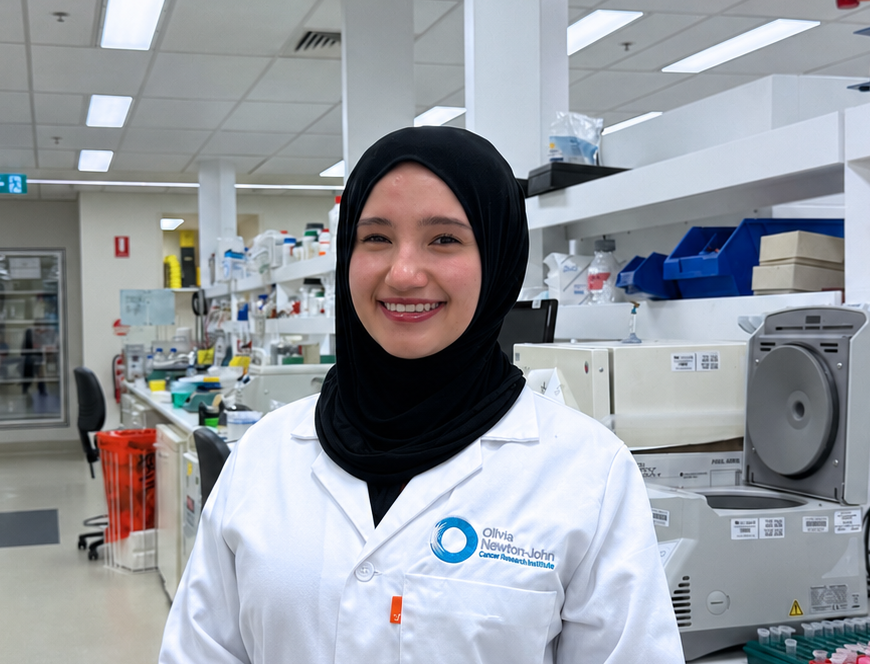
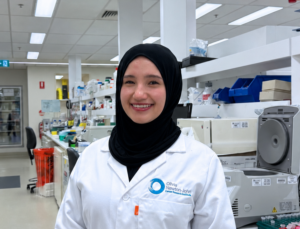
Ms Fatimah Jalud has been awarded The Griffiths Family PhD Scholarship, generously funded by the Griffiths family to advance blood cancer research and contribute to the development of more effective treatments and better outcomes for people affected by blood cancer.
Challenge
Relapse remains a major cause of death in childhood acute lymphoblastic leukaemia (ALL), particularly for children and infants with a high-risk subtype known as KMT2A-rearranged B-cell ALL. Although many children initially respond well to treatment, some leukaemia cells survive therapy and can adapt over time, allowing the cancer to return. These resistant cells are difficult to eliminate with current treatments, including chemotherapy and newer immune-based therapies.
Focus
This research will use advanced genomic and gene editing approaches to understand how leukaemia cells survive treatment and drive relapse. By studying individual leukaemia cells from patients at diagnosis, during treatment, and at relapse, researchers will identify the features of cells most likely to persist. Gene editing models will then be used to recreate key genetic changes found in KMT2A-rearranged leukaemia and investigate how these changes allow cells to adapt and evade treatment.
Impact
By improving our understanding of the cells and biological processes that cause relapse, Fatimah’s research aims to identify new treatment opportunities and strategies that could be combined with existing therapies. Ultimately, this work could support the development of more personalised and effective treatments for children with high-risk leukaemia.
Researcher
Fatimah Jalud is a translational blood cancer researcher at the Olivia Newton John-Cancer Research Institute, whose work focuses on the genetic drivers of relapse and aggressive leukaemia. Her work focuses on identifying novel disease mechanisms and treatment vulnerabilities, with the goal of supporting more effective, personalised and less harmful treatments for children with high-risk blood cancers.