CAR T-cell therapy is a type of treatment that uses your own immune cells to fight cancer. T cells are part of the immune system, which helps protect the body from illness and cancer. They can find and destroy abnormal cells, including some cancer cells. However, cancer can sometimes hide from the immune system. So, CAR (chimeric antigen receptor) T-cell therapy trains the immune system to find and attack some types of cancer.
Understanding T cells

Many different cells and organs make up your immune system. Its primary role is to protect you from infection. It also looks for invaders, including cancer. It does this by tracking proteins called antigens on the surface of invading cells.
T cells are a type of white blood cell in your immune system, they:
- help protect you from infection
- have their own surface protein called receptors
- can recognise cells that have abnormal antigens
- can destroy abnormal cells.
CAR T-cell therapy process
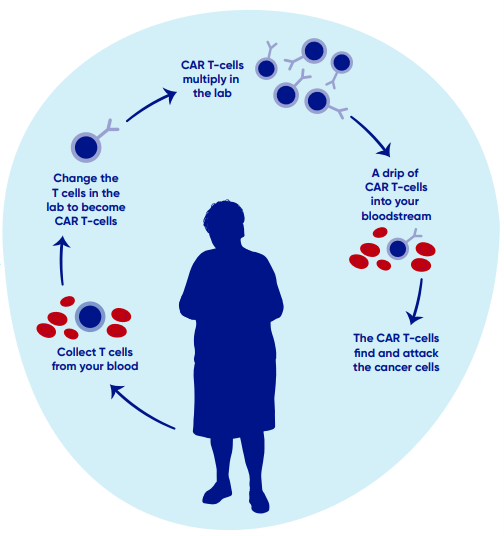
CAR T-cell therapy is a type of immunotherapy that is sometimes referred to as a CAR T-cell transplant.
CAR T cells are:
- collected from you through a process called apheresis
- sent to the lab where genetic information is added to them as well as chimeric antigen receptors (CARs)
- tailor made to recognise your cancer
- grown and multiplied until there are millions of them
- infused after your body is prepared with chemotherapy through an intravenous (IV) drip.
- able to recognise, attack and kill the cancer cells
- able to remain in your body for a period of time to continue fighting cancer, although this varies from person to person.
Receiving CAR T-cell therapy is a complicated and long process. It is important to have a discussion with your haematologist and go through any questions you may have.
Types of CAR T-cell therapy
There are multiple CAR T cell products that have been approved for use by the Therapeutic Goods Administration (TGA):
| Kymriah® (tisagenlecleucel) Paediatric and adolescent ALL Adult relapsed or refractory DLBCL | Yescarta® (axicabtagene ciloleucel) Adult relapsed or refractory DLBCL Relapsed/refractory follicular lymphoma |
| Tecartus® (brexucabtagene autoleucel) Relapsed or refractory MCL Relapsed or refractory B-ALL | Carvykti® (ciltacabtagene autoleucel) Relapsed or refractory myeloma |
Blood cancer and CAR T-cell therapy
CAR T-cell therapy is an approved treatment for these blood cancers:
- relapsed or refractory diffuse large B cell Lymphoma (DLCBL)
- relapsed or refractory mantle cell lymphoma (MCL)
- relapsed or refractory B-cell acute lymphoblastic leukaemia (B-ALL) in adults and children
- myeloma.
Side effects of CAR T-cell therapy

CAR T-cell therapy can cause side effects. Some side effects are caused by the chemotherapy you have before treatment. Others are caused by the CAR T cells and can be serious. Some side effects need urgent medical attention, so it is important to tell your treatment team straight away if you feel unwell.
Serious side effects include:
As CAR T cells multiply, they release chemicals called cytokines into the blood. This can make the immune system overactive and may cause serious symptoms, such as:
- high fever and chills
- trouble breathing
- severe nausea, vomiting, and/or diarrhea
- feeling dizzy or lightheaded
- headaches
- fast heartbeat
- feeling very tired
- muscle and/or joint pain.
CAR T cells can affect the nervous system and cause neurological problems. These side effects are called immune effector cell associated neurotoxicity syndrome (ICANS), or neurotoxicity.
These are some of the symptoms of ICANS:
- headaches
- changes in consciousness
- confusion or agitation
- seizures
- shaking or twitching (tremors)
- trouble speaking and understanding
- loss of balance.
For information on chemo side effects, please visit Chemotherapy – Leukaemia Foundation.
Precautions to take during CAR T-cell therapy
- Stay close to the hospital if you live regionally. Accommodation can be arranged through a social worker at your treatment centre or contact Accommodation services – Leukaemia Foundation.
- Consider having a support person stay with you while you are having treatment.
- Do not drive for at least 8 weeks after having CAR T-cell therapy.
- Follow the instructions from your treatment team.
Clinical trials and CAR T-cell therapy

Researchers continue to look for new uses of CAR T-cell therapy by undertaking clinical trials. It is best to talk with your treatment team about these as they will have access to the most up to date information. You can search for clinical trials at Clin Trial Refer.
CAR T-cell therapy locations
Some hospitals not mentioned above might offer CAR T-cell therapy through clinical trials. Check with your treatment team to see if this is available at a location near you.
More information on CAR T-cell therapy
References
- Associate Professor Paul Beavis receives Cancer Council Victoria Venture Grant to develop CAR T-cell therapy for solid tumours – Peter MacCallum Cancer Centre
- Treatment fact sheet template
- CAR T-cell therapy now available at Princess Alexandra Hospital, Brisbane
- CAR T-cell Therapy and Its Side Effects | American Cancer Society
- CAR T Cells and T-Cell Therapies for Cancer: A Translational Science Review – PMC
- Cell therapies – Peter MacCallum Cancer Centre
- Standard of Care in CAR T-Cell Therapy – Peter MacCallum Cancer Centre
- YESCARTA® (axicabtagene ciloleucel) Patient & Caregiver Site | CAR T-Cell Therapy for Certain Types of Non-Hodgkin Lymphoma in Adults