Treatment with CAR T-cell therapy is “a revolutionary step forward” according to Associate Professor Michael Dickinson who has been involved with the development of this immunotherapy in Australia since 2010.
“This amazing technology goes a long way towards addressing patients with hard-to-cure leukaemia and lymphoma who really need new treatment options,” said A/Prof. Dickinson.

He is Disease Group Lead in Aggressive Lymphoma and Deputy Clinical Director of the CAR T-cell service at Peter MacCallum Cancer Centre and haematologist at the Royal Melbourne and Cabrini hospitals. He also is a member of the Blood Cancer Taskforce.
“CAR T-cell therapy is effective where chemotherapy and radiotherapy isn’t, and it’s remarkable proof that you can harness and modify the immune system to kill leukaemia and lymphoma,” said A/Prof. Dickinson.
“Approvals of CAR T-cells herald a change in the way we think about anti-cancer therapy and the possible approaches we have to curing cancers, particularly blood cancers.”
We asked A/Prof. Dickinson… what is CAR T-cell therapy exactly?
“T-cells are the body’s own defence from cancer. They constantly roam the body, destroying the abnormal cells they find. With CAR T-cells, we collect those lymphocytes and genetically modify them to target the cancer, using a protein on their surface called a chimeric antigen receptor (CAR),” he explained.
“That receptor is a hybrid protein that doesn’t exist in nature; it’s part antibody and part T-cell receptor, so you can choose the specificity of the CAR, and for the approved leukaemia and lymphoma indications, the CAR is anti-CD19. The cells are made to express this protein, then they are grown up in the lab to produce a product that can be infused into the patient.
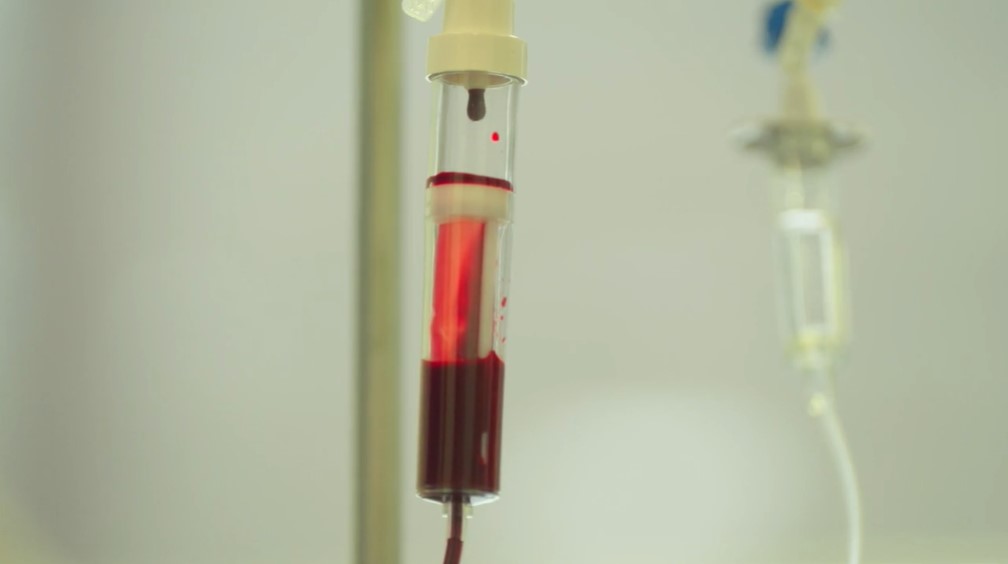
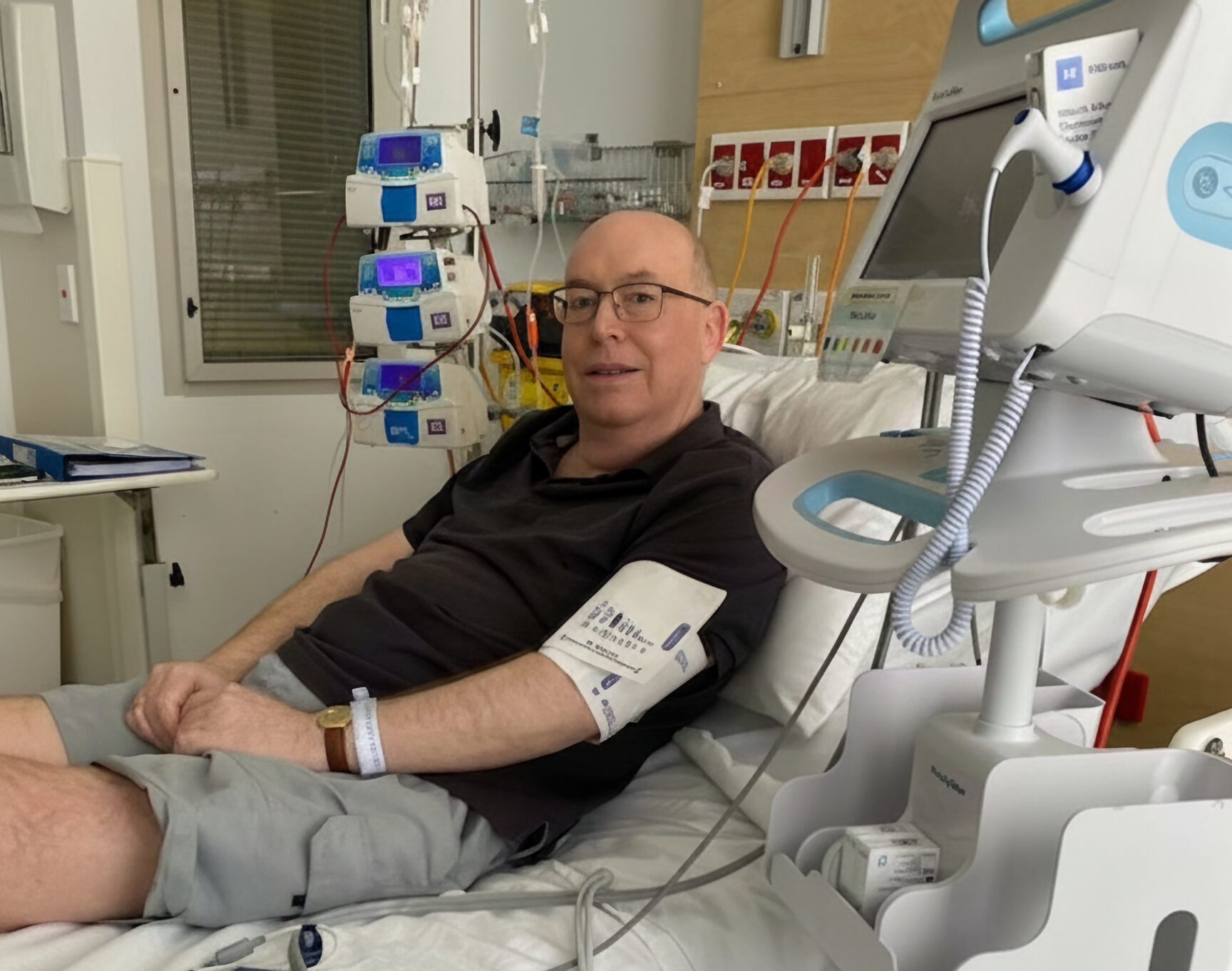
“Before the infusion, we give some chemotherapy to reset the immune system and give those lymphocytes space to grow. When we infuse the CAR T-cells, in a procedure that is similar to a stem cell infusion, they grow and multiply to kill the leukaemia or lymphoma while they see it, and they all carry the chimeric antigen receptor in their code,” said A/Prof. Dickinson.
“It’s a one-off treatment that is alive and persists in the body for some time and continues to act as an anti-cancer treatment in a sustained way.
“The key advantage of CAR T-cell therapy is that it’s a one-off infusion, as opposed to regular treatments with something else that needs repeated dosing.”
A/Prof. Dickinson said that while CAR-T outcomes can still be improved, “the sheer fact that this works opens up a new era for anti-cancer therapy”.
“We’ll look back on these days as the defining moment in terms of our ability to control acute leukaemia and lymphoma,” he said.
Right now, CAR T-cell therapy is underway at six locations in Australia–Royal Brisbane Hospital, Sydney Children’s Hospital and Royal Prince Alfred Hospital (RPA), Westmead and The Children’s at Westmead hospitals, also in Sydney, and at Peter MacCallum Cancer Centre (Peter Mac) and Royal Children’s Hospital, both in Melbourne. At each site the Australian Government is funding supply of CAR T-cells to patients with particular indications in leukaemia and lymphoma.
A short history of CAR T-cell therapy in Australia
CAR T-cell therapy first appeared on the radar in Australia when A/Prof. Dickinson and colleagues saw the data from Professor Carl June and two particular cases; a patient with chronic lymphocytic leukemia and a young girl with acute leukaemia who had a remarkable response.
“That one story [about Emily Whitehead] was enough to really alert the world to the possibilities of this treatment,” said A/Prof. Dickinson.
“Then we saw small trials coming out of the University of Pennsylvania that made us say, ‘gee, this is a technology we really want to be involved with’.
“We had our own inventions, expertise, and capacity at Peter Mac to invent and manufacture these cells.
“When Novartis bought the product and decided to run a clinical trial, we and other sites in Australia wanted to be involved,” he said.
“We worked hard to develop a program that would support the conduct of those trials at Peter Mac, and other sites in Australia did the same, RPA being one of them, and it all went from there basically.
“We were involved in the first trial that showed the Novartis CAR-T product was active in lymphoma, and The Children’s was involved in the first trial that showed it was active in leukaemia.
So, we’ve been there from the start in terms of our involvement for each indication.
While CAR T-cell therapy is now largely used in the relapsed and refractory setting, A/Prof. Dickinson said work was being done to bring it earlier in the treatment sequence and that work is more advanced in lymphoma.
“There are clinical trials that have completed recruitment that have randomised patients to receive CAR-Ts versus standard therapy, which in the case of lymphoma is autologous stem cell transplantation (SCT).
“Those trials are being run by three separate companies that have similar CAR T-cell products, and we’re waiting on the results, to see whether CAR-T is better than stem cell transplants for the patients with their first high-risk relapse of diffuse large B-cell lymphoma (DLBCL).
“Those trials will tell us whether CAR-Ts are useful on the second line.
“And recently I’ve been involved in a clinical trial that looked at CAR-Ts as front-line therapy. That trial, again in aggressive lymphomas, has been presented at international conferences and shows promising results,” said A/Prof. Dickinson, who specialises as a principal investigator in Phase I/II clinical trials of new anticancer drugs.
“But as you bring these treatments earlier in the treatment sequence, the cost becomes a bigger and bigger issue.
You have to show not only that the treatment is better, but also that its cost effective in terms of the improvement and outcome that it offers.
“That’s relatively easy to show in patients who have no treatment option, because if you’re curing some people, then you can show that for every cure you’re achieved there’s some value, compared to curing very few, which is the bar you have to jump when you’re looking at third- and fourth-line application of this technology.
“But as you bring it into second-line and first-line, you have to show the treatment is not only better than the standard, but it’s better in a way that’s reasonably affordable for our healthcare system to be able to manage. So, the bar is higher because these treatments are so expensive,” said A/Prof. Dickinson.
“Paediatric ALL and DLBCL are amongst our most curable cancers with standard chemotherapy.
“If CAR-Ts were free and CAR-Ts could produce complete remission and curable remissions greater than 85-90%, then of course, that would be more attractive than chemotherapy, from a patient experience perspective.
“But the quantum of cost and complexity is completely different. It’s a vastly more expensive treatment.
“At the moment, CAR-Ts cure 30-40% of patients with DLBCL and two-thirds of patients with ALL who otherwise didn’t have a curative treatment option. But in the front-line setting, chemotherapy cures 65-70% of patients with DLBCL, so CAR-Ts have to do better than that,” explained A/Prof. Dickinson.
“There is a future though if we can pick out patients who are likely to do poorly with chemotherapy due to molecular features, such as cytogenetic changes or particular molecular markers, that tell us chemotherapy is less likely to work.
“Then we could select those patients for these more expensive, novel therapies to show that there’s a benefit for them over chemotherapy,” said A/Prof. Dickinson.
Australian patients can now receive their CAR T-cells on home soil
Initially, Australian patients used to fly to the U.S. to have their T-cells harvested, re-engineered, and given to them there.
Then, patients could be treated in Australia, by having their CAR-Ts harvested here, the cells were posted to the U.S. to be manufactured, then brought back to Australia to be infused.
“So all their care was in Australia, but the manufacturing process was overseas,” said A/Prof. Dickinson.
“What’s changed recently is that Cell Therapies, a company owned by Peter Mac, has a commercial arrangement with Novartis to manufacture those CAR T-cells at Peter Mac. They’ve started doing that for both clinical trials and commercial sectors and their capacity is being ramped up in a planned way.
“So right now, for the Novartis product, some patient’s cells will still go overseas, and some will be manufactured at Peter Mac, depending on where the queue is the shortest.
“If an Australian patient has their T-cells harvested and there’s a slot for manufacturing in Australia, preferentially, no one will want to send the cells around the world.”
Comparing the Novartis product made in Australia and the same product made in the U.S., A/Prof. Dickinson said, “technically, they are identical”.
“Hopefully, in the very foreseeable future, we’ll have enough capacity in Australia to manufacture all the CAR T-cells that are needed locally.”
Support for patients on CAR T-cell therapy
A/Prof. Dickinson said that, as CAR-Ts were available in just a few hospitals around the country, there was support (flights and accommodation) for patients to travel to receive this treatment.
“Early inquiries in patients who have relapsed disease are helpful.
“To be eligible for CAR-T, patients need to be fairly fit and relatively well to have the treatment.
“There is a national process for reviewing all referrals and confirming eligibility for CAR-Ts, to make sure everyone can access the treatment, no matter where they live,” said A/Prof. Dickinson.
“In a really fantastic collaboration between all of the CAR-T centres, we have a national meeting every Tuesday of all the physicians who are using CAR-T, to make sure we’re using the treatment properly, and giving everyone fair access to the treatment.
It’s a real effort by clinicians in this space to make sure every Australian can access these treatments if they need them.
“Patients should go to their treating haematologist, who should be aware of the indications for CAR-T and how they’re being applied, and who would be able to refer them on for consideration of CAR-T if it’s required,” said A/Prof. Dickinson.
Ongoing development of CAR T-cell products
A/Prof. Dickinson explained that multiple companies are working in this space and CAR T-cells aren’t just one thing, but “lots of different things”.
For example, CD19 CAR T-cells are manufactured by several different companies and it’s only the Novartis product, tisagenlecleucel (Kymriah®) that’s being manufactured in Australia at the moment.
“That doesn’t mean we wouldn’t recommend a different product for a patient depending on their individual circumstance.
“The Kite Gilead product, axicabtagene ciloleucel (Yescarta®), has been approved in Australia and will be manufactured overseas, and there may be circumstances, if funded, where we want to prescribe that for a particular patient. Indeed, we’ve prescribed that a lot within clinical trials so far.
“As new CAR-Ts come out for leukaemia and lymphoma, other blood cancers, and solid tumours, they won’t all be manufactured in Australia but in different places, depending on the specifics of that individual product.”

Other differences between CAR T-cell products
A/Prof. Dickinson said the other thing that differs is the type of T-cell receptor and specifics about how the T-cell receptor is constructed within the CAR. The Novartis and Gilead products differ in what’s called the co-stimulatory domain–one of the signals that the T-cell has to expand and kill–so they are slightly different in terms of the technical ways they are manufactured and the patient experience.
In acute B-cell lymphoblastic leukaemia, there’s only one product currently approved; the Novartis one.
A/Prof. Dickinson said CAR T-cell products also differ by targeting different receptors, and both the Gilead and Novartis ones target CD19 on the surface of B-cell malignancies.
There are several hundred trials around the world in CAR-Ts.
“Some are looking at ways of using CD19 CAR T-cells differently, for different lymphomas. Others are looking at combinations of CAR-Ts with drugs, and others are looking at new CAR-Ts that might target something other than CD19, or target more antigens than just CD19.
“In leukaemia, you could target CD19 and CD22 at once. That might improve the response rate, and that’s still being explored in clinical trials.
“Australia needs the capacity to manufacture this kind of product because new cancer therapies will come through and there will be inventions in Australia that we will want to manufacture to a commercial, clinical grade, locally.
“Australia’s long-term plan is to participate in clinical trials and develop new CAR T-cells, and now, in the COVID-19 pandemic setting, where flights are cancelled and borders close without warning, having the secure supply of this medical product in Australia is very important for Australians,” A/Prof. Dickinson said.
He estimates that more than 100 Australian patients have had their CAR T-cells ordered for them and given within Australia, in addition to those who have gone overseas.
“Peter Mac is treating between two and four patients a week with CAR T-cells across a combination of clinical trials and the commercial product. And Royal Brisbane and RPA are treating lots of patients as well,” said A/Prof. Dickinson.
“The capacity is increasing and one of the issues is awareness by patients and haematologists that this treatment option is potentially appropriate for lymphoma and leukaemia.
“As most acute leukaemia patients up to the age of 26 are cured with chemotherapy, those who will need this treatment is between 20-30 patients a year for that age group, so it’s not a huge demand.”
Patients older than 26 can currently access CAR T-cells through clinical trials in Australia if they have B-ALL, but they can’t access it through government-funding.
“There is nowhere in the world where CAR-Ts are approved for patients with ALL who are older than 26, at the moment,” said A/Prof. Dickinson.
“The trials in that space were suspended because patients were having more side effects from the treatment, so the companies decided to focus first on DLBCL, which is vastly more common.
“The Australian government estimated around 400 people with DLBCL per year might need this treatment, so given the complexity of manufacturing, the companies decided to prioritise the most common cancers first.
“Now companies are trying to expand the use of CAR-Ts in adults with ALL, and there are a lot of active trials in that space at present.”
Survival rates for CAR T-cell therapy
It is still early days and A/Prof. Dickinson said, “you really want to follow a patient for beyond five years to say, ‘yes, the patient’s cured’”.
“Roughly half of patients with DLBCL will have a complete remission across the two different product types, after having CAR T-cell therapy (following at least two prior therapies).
“Then at the 12-month mark 35-40% of them will have retained that complete remission, and that seems to hold at two years.
“For that disease [DLBCL], if you go beyond two years and if patients haven’t relapsed, then they’re relatively unlikely to relapse,” he said.
This figure of 30-40% “is not good enough is it?”, said A/Prof. Dickinson, but it’s “substantially better than the alternative, and there’s plenty of room for improvement”.
“In ALL, it’s quite different – the remission rate in children is much higher.
“In the paediatric ALL population, the initial complete remission rate is 83%; that’s the best overall response after CAR T-cell treatment.
“The six-month event-free survival is 67%, so two-thirds of patients will be free from progression at six months and the relapse-free survival at 12 months for ALL is 64%.”
CAR T-cell therapy – a live, one-dose treatment
A/Prof. Dickinson describes CAR T-cell therapy as a “one-dose therapy”, and “if it works, it works, and it hangs around in the body”.
“In ALL, these cells stay alive for months and months after they’re given.
“That sustained action is probably one of the reasons they work so well in ALL. That phenomenon where they hang around is call persistence – it’s a live treatment.”
A/Prof. Dickinson said CAR-T was routinely administered in an outpatient setting for DLBCL, but not for paediatric ALL “because there’s a higher rate of neurological toxicity in that population”.
Use of CAR-Ts for myeloma and other lymphomas
A/Prof. Dickinson said preliminary data that’s being presented suggests that CAR-Ts are very active in myeloma and there are a couple of CAR T-cell products “that are promising”.
“A number of commercial companies are very aggressively trying to develop CAR-Ts in myeloma, and if you were to guess the next disease beyond lymphoma that’s going to have CAR-T approvals, it will be in myeloma,” he said.
“For myeloma, we’ve got different targets, they’re not CD19 CAR-Ts, and there’s quite a lot of trial activity in that space and I anticipate success in terms of myeloma coming on board.
“And that will change the number of patients who are having CAR-T in Australia dramatically, because myeloma is a relatively common disease.
“And in lymphoma, there’s an approval in mantle cell lymphoma, in Europe and the U.S., and follicular lymphoma has been approved in the U.S.
“We’ll see more and more lymphomas come onboard with the CD19 CAR-T.”
A/Prof. Dickinson said funding approvals would still have to be based on CAR-Ts being a good and cost-effective treatment option for areas of need.
“They have to meet the requirements of any drug, which is to be cost effective, safe, and provide benefits for the patients.
“The lesson from ALL and the different lymphomas is that this technology can work, we just have to see if it’s the best, or good enough, for myeloma and these other diseases.”
Myeloma is incurable, but A/Prof. Dickinson said so is relapsed DLBCL with no other treatment options, and follicular lymphoma, and mantle cell lymphoma that’s relapsed after multiple treatments.
“So that’s where these treatments are most easily going to get approved, and then to move them into an earlier line of treatment is going to be a higher bar to reach,” he said.
“In some ways CAR-Ts are incredibly exciting cellular products that show just incredible inventiveness and a different way of killing cancer from what we knew about 20 years ago, in the capacity to distribute that drug, get it into patients, and keep them safe.
“On the other hand, it’s just a drug, and it has to be assessed as a drug, like any other drug; it has to be value for money and good.”
A/Prof. Dickinson said his holy grail was “eradicating B-cell lymphomas as a cause of death for patents and that allogeneic stem cell transplantation (SCT) would no longer be needed as a treatment option for patients because we have therapies that use T-cells in a more targeted way”.