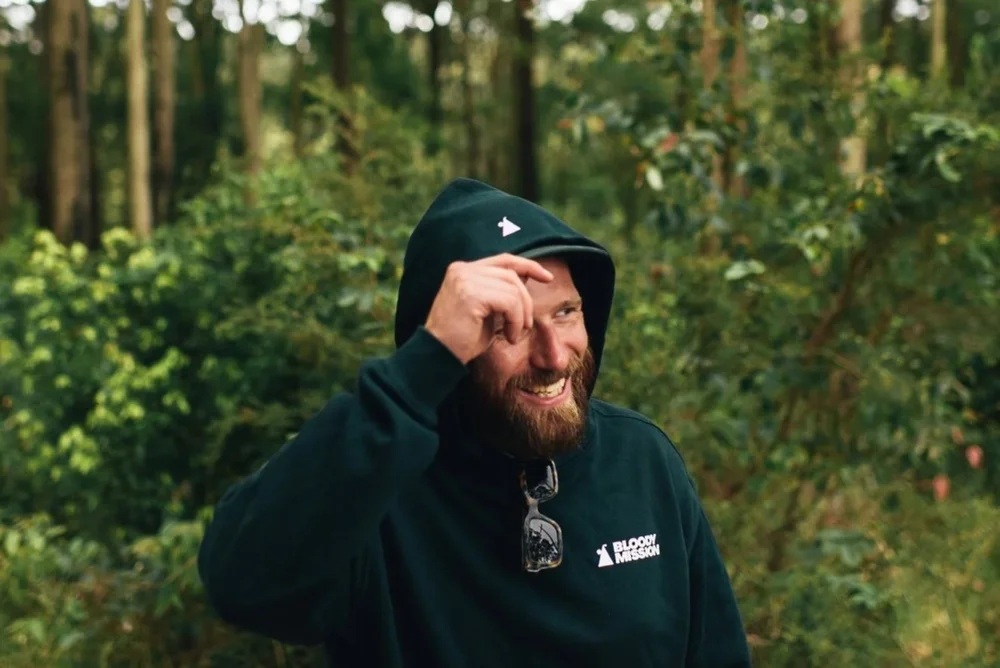
Kish Modi is facing the momentous task of managing a blood cancer diagnosis. But even with so much on his plate, he’s somehow finding every way in his power to raise awareness.
The 35-year-old says Saturday 14 October 2023 is a date he’ll never forget.
Before then, his body didn’t show a hint of illness. “I was fit, young, healthy, working, doing my thing, walking my dog, running and going to the gym,” says Kish.
On October 14, Kish, his partner Paul and friends were out for a drink in a Sydney pub. Kish started feeling dizzy and told Paul he needed to go home.
When Kish arrived home, he started vomiting and experiencing diarrhoea. Like many of us would, he assumed he had food poisoning.

“People always say to contact your GP, but I didn’t really have one. I’m not someone who often goes to the doctor. We found a doctor online at our local medical centre and booked a telehealth appointment.”
Through the camera, the doctor told Kish he looked “grey” and needed to visit the clinic for a blood test. “I could barely walk to the medical centre,” he says.
Kish’s symptoms worsened as he awaited the blood test results, so he and Paul went to the emergency department. Kish was whisked to the top of the triage list. “That was the first real inkling of things being more serious.”
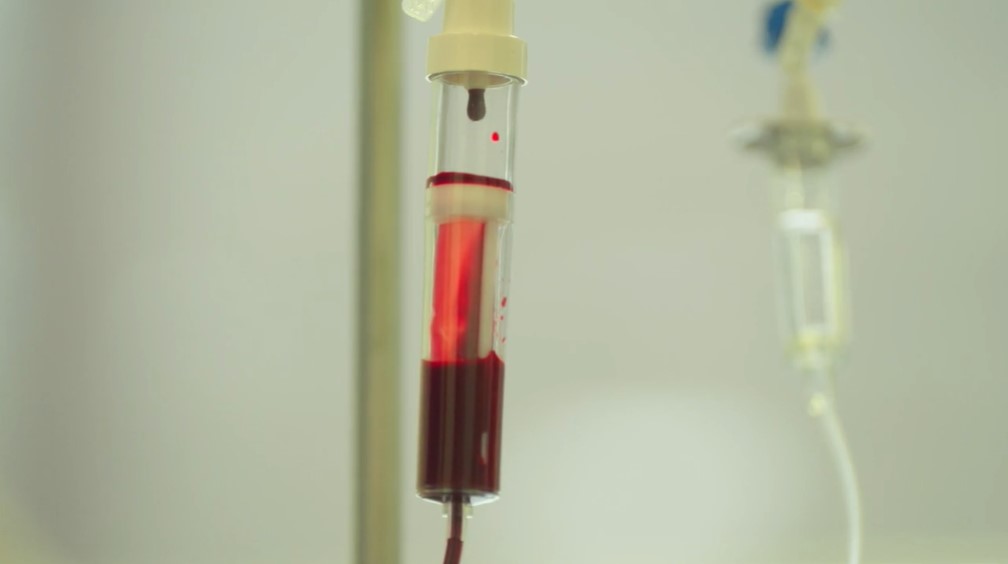
Medical staff told Kish he needed a blood transfusion but did not clarify why. The prospect of food poisoning was off the table.
“At about 3am in the morning, the GP called us. She received my blood test results and wanted to see if I was in hospital.” She did not share his diagnosis on the phone.
The next day in the emergency department, a haematologist went up to Kish. “She said, ‘Darling, do you know what’s happening?’.”
“No,” Kish replied.
“She grabbed my arm and said, ‘You have leukaemia’.
“I just screamed and said ‘no’,” says Kish. “I didn’t believe it. I was sitting there saying, ‘do more tests’.”
Kish’s treatment started immediately
Kish was transferred to the intensive care unit for a few weeks, before spending three months in hospital being treated for acute myeloid leukaemia (AML), an aggressive form of blood cancer that needs to be treated as soon as being diagnosed.
About 1200 Australians are diagnosed with AML each year, but only about 200 are aged under 50.
Kish describes that time in hospital as a blur, where doctors deliberated over what chemotherapy to give versus the effect it would have on his organs.

Kish’s cancer and treatment sadly came with complications. He needed to have his rectum and part of his bowel removed. He’s now aided by a stoma bag, which helps remove his body’s waste.
At the beginning, I didn’t want to look at it. It’s been really difficult actually. I thought, if I don’t look at it, maybe it will go away. Things don’t really work like that.”
“We’ve named it Stevie. I remember Paul and I were laughing at the hospital bed – I was laughing slash crying, to be honest. I found it quite hard to accept that I had a stoma bag. But by giving it a name and a persona, it made it a little bit easier.”
“Now, I’m pretty comfortable with it. I’m obviously still emotional, but through a bunch of therapy, really cool doctors, I’ve accepted it and it’s been part of my journey. The way I think I’ve accepted Stevie is that he saved my life. I’m still here and without him, I probably wouldn’t be.

Before diagnosis, Kish had heard about leukaemia. “I thought really young or really old people got diagnosed with it, and I knew it could be life-threatening”. But he didn’t know much more.
Over the last 10 months, Kish has “learned a hell of a lot about AML” as well as the fact there are over 120 types of blood cancer.
The next step is for Kish to undergo a stem cell transplant, which is necessary to ensure that bone marrow is repopulated with healthy donor blood stem cells following high-dose treatment. The new blood stem cells rebuild the body’s blood and immune systems.
Kish’s countless learnings, so far
Among it all, Kish considers himself fortunate for a few reasons.
We live in inner Western Sydney, the hospital is 10 minutes up the road. Both my partner and I have been able to focus on just the cancer. We haven’t had to remortgage the house. My partner’s been able to go on leave from work and has basically become my primary carer.
Unlike Kish, more than a quarter of Australians live in regional and remote areas but they make up 41% of all blood cancer patients. And we know those in regional and remote areas are less likely to survive beyond five years of a cancer diagnosis compared to those in major cities.
Kish flags that with a blood cancer, there’s generally no quick-fix treatment. “From diagnosis to being in remission, it could take anywhere from months, if not a year. In my case, it’s going to be probably at least a-year-and-a-half, if not two. That’s pretty challenging.”
But I’ve met people in hospital who have needed to travel very far to get medical treatment. They’ve had to remortgage their house. They’ve had to think through what they are going to do in terms of their income, how they’re going to feed their kids, all of these other things.”
“Then I thought, I’m already finding this really hard but I’m fortunate.
From there, Kish was energised with a new mission. “How do we help others who are going through similar or harder battles?”
Since being diagnosed, Kish and his family decided to raise funds for the Leukaemia Foundation. They’re matching every dollar they raise, up to $100,000, with the aim of donating $200,000 by January 2025.

“That will go towards people who are struggling, including helping provide people with accommodation near hospital during treatment.”
Kish credits his support network, his friends his family and his psychologists. “I’d never seen a psychologist or a therapist but having access to that helps with my struggles and understanding different frameworks of how I can accept what’s happened to me. How I get through the next hour, day, month.”
Kish has a strong message for someone who’s just been diagnosed with blood cancer.
Be really easy on yourself. It’s a marathon, not a sprint.
He says to lean on your support network and if you don’t have a strong one near you to seek support from organisations such as the Leukaemia Foundation.
Don’t try to do it by yourself. It’s a very difficult thing to try to fight solo. It’s not this beautiful exponential curve that just improves. Some days, I feel great, and other days, I can barely get out of bed because I’m tired and I don’t want to deal with it. That’s when you need people around you to help.
Blood cancer doesn’t discriminate, so neither should anything else
In his mid-30s, Kish didn’t think he’d become ill, let alone have a blood cancer. “Whether you are young, you’re old, you’re gay, you’re straight, you’re by yourself, you’re married, you’ve got kids, it doesn’t discriminate.”
I think it’s really important as a community that we recognise that people have different challenges. Everyone’s cancer journey is very different, but everyone deserves access to the treatment that they need to be cancer-free. Everyone definitely deserves a fair go.