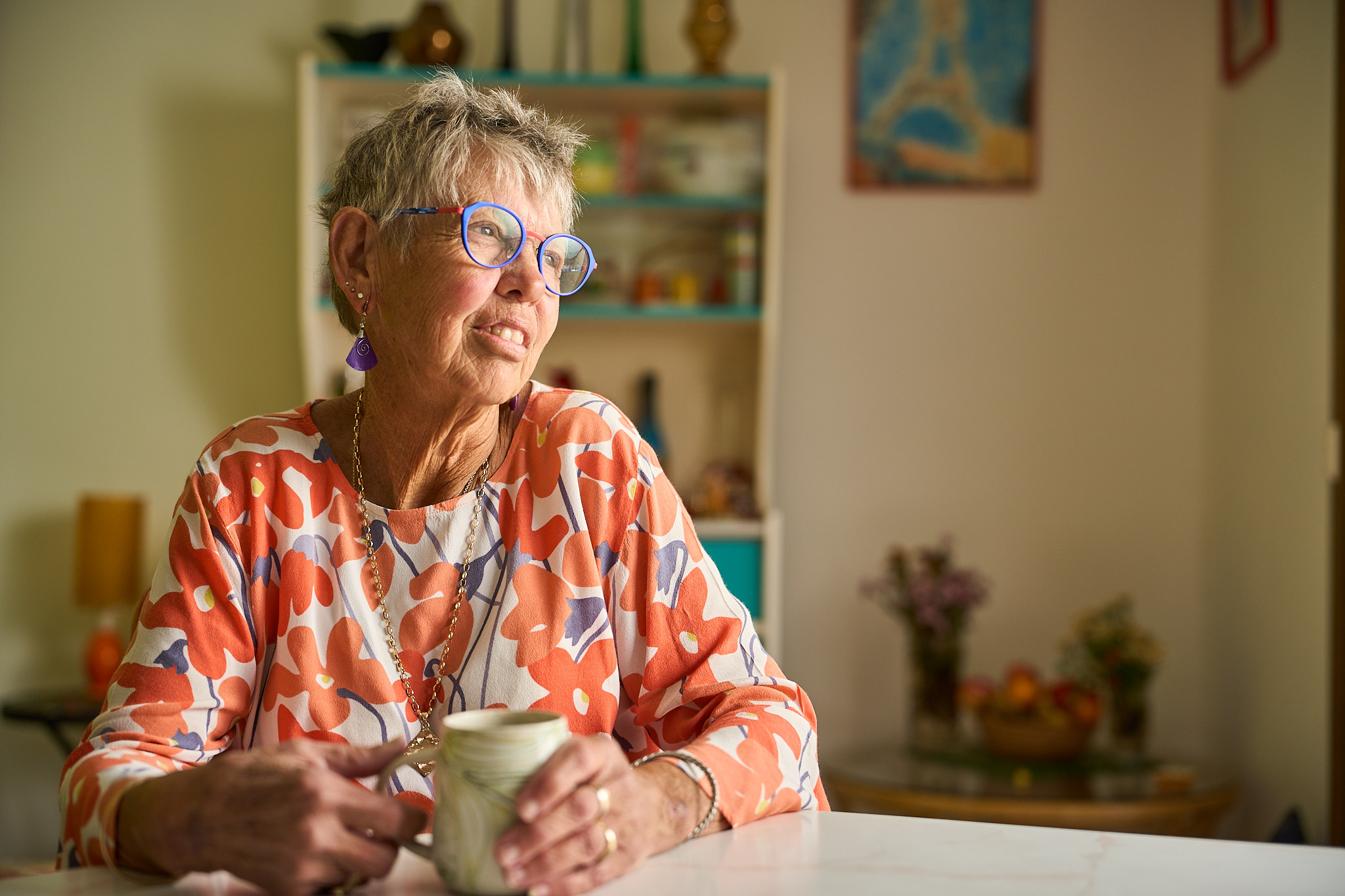
Dr Simon Gibbs is a consultant haematologist (Myeloma/Amyloidosis Lead) at the Department of Clinical Haematology Eastern Health (Melbourne), Director of the Victorian and Tasmanian Amyloidosis Service, a founding member of the Australian Amyloidosis Network (AAN), and Honorary Senior Lecturer at Monash University. In this far-reaching interview, he discusses everything from the incidence, diagnosis and treatment of amyloidosis, to supportive care, quality of life, and how Dr Gibbs came to specialise in this field.

What is amyloidosis and how common is it?
Dr Gibbs describes amyloidosis as “a group of diseases where proteins within the body kink or misfold, then stick together abnormally and deposit in organs causing them damage. Once enough of these sticky misfolded proteins or amyloid ‘fibrils’ deposit in the organs, they can cause the organs to fail”.
“Amyloidosis is not as rare as we once thought it was. There are many types, but the two most common are AL and TTR,” said Dr Gibbs.
“In AL, the misfolded proteins are excessive amounts of light chains, which are part of the immune system and produced by the bone marrow.
“In TTR, the misfolded proteins are transthyretin, a protein mostly produced in the liver, but the amyloid fibrils mainly affect the heart.
“Unfortunately, both TTR and AL amyloidosis are under-diagnosed or diagnosed late. We know many patients will see several specialists over many months before the diagnosis is made.”
We still have the challenge that amyloidosis can be difficult to diagnose.
“Fortunately, in the last decade we’ve discovered there’s an easier way to diagnose TTR amyloidosis, by using a special bone scan. This has led to greater awareness of this disease, so patients are being diagnosed and treated earlier, and hopefully that equates to better quality of life and overall survival.”

And there’s more awareness of AL amyloidosis now than six years ago, when Dr Gibbs returned to Australia from the UK.
“AL amyloidosis is a disease of adults. We don’t see it in children, it’s unusual before the age of 45, and the incidence seems to peak in the mid-60s.”
According to a Queensland study, approximately 12 people per million are diagnosed with AL amyloidosis, and there is a slight male predominance.
In TTR amyloidosis, 85-90% of patients have wild type (or non-hereditary disease) and 90% of these cases occur in men, with the average age at diagnosis being 75-80 years.
In the 10-15% of people with of TTR that is hereditary, the disease affects men and women equally and is more likely to involve the nerves. This can cause numbness, pain or electric shock-like feelings in the feet, cramping of the legs, weight loss, bowel disturbance, and dizziness.
Dr Gibbs said TTR amyloidosis appears to be a disorder of ageing. In Japanese and Finnish studies that looked at autopsies of people aged 90 or older when they passed away, it was discovered that 25% of these people had amyloid deposited in their hearts.
It seems that if we live long enough, we’ll probably all develop TTR amyloidosis!
“We think there are about 7000 people with TTR amyloidosis in Australia, but this is a wild guess.
“Detection of this disease is definitely increasing. In 2016, we had one new referral a month to the Victorian and Tasmanian Amyloidosis Service, now we’re receiving one or two per week.
“In Melbourne at least, this disease is seen mainly in Caucasians, particularly of Italian heritage, and we don’t see it so much in people of Asian backgrounds.
“Interestingly, there seems to be a slight predominance in people who have been elite athletes in their youth,” explained Dr Gibbs.
“I have a number of ex-AFL footballers who have TTR amyloidosis.”
Dr Gibbs said a ‘red flag’, or warning sign, for TTR amyloidosis is any man aged over 60 who has had both his carpel tunnels released.
“So, if a man has had a carpel tunnel release operation on both wrists, our rule of thumb is that you should always consider that they are at high risk of developing TTR amyloidosis. If these men present with shortness of breath, unexplained weight loss, fatigue, or swollen ankles, they have TTR amyloidosis until proven otherwise, and they should immediately have a bone scan.”
That’s one of the messages we are really trying to deliver now to cardiologists.
One of the differences with TTR amyloidosis, compared to AL (which can affect almost any organ), is that typically TTR only affects the carpal tunnels, the heart, and spinal ligaments.
“Over 70% of TTR has had carpal tunnel syndrome, which usually develops 10-15 years before heart problems emerge. Many, especially ex-sportsmen, will also have had laminectomies or spinal surgeries in the past.”

Dr Gibbs wonders whether tissues in the body that have been used a lot are more prone to laying down TTR amyloid fibrils, such as the hands, back, and heart, and “sportspeople tend to use these a lot, but we really don’t know”.
“There are lots of unanswered questions and that’s one of them.”
But Dr Gibbs said the good news is that, over the last five to 10 years, the availability of medications that can slow progression of TTR amyloidosis has increased.
“The advantages of attending an AAN centre is access to drugs that you can’t get elsewhere, such as diflunisal, which, if tolerated is a good treatment for TTR, especially neuropathic disease; compassionate access programs for drugs like tafamidis; or clinical trials of newer therapies, such as patisiran or inotersen.”
And Dr Gibbs said trials of gene-silencing medications to reduce the production of TTR look particularly promising.
With other non-TTR hereditary forms of amyloidosis, Dr Gibbs expressed his frustration that there still were no specific treatments for those patients.
“Sometimes we put our patients on doxycycline – an old antibiotic – which may slow the misfolded proteins sticking together, so hopefully slowing the disease a little bit, but a lot more research in this area is desperately needed.”
Dr Gibbs highlighted the point that the amyloid proteins in Alzheimer’s disease are “completely different” to the amyloid proteins seen in AL or TTR amyloidosis, “so the risk of developing Alzheimer’s for someone with TTR or AL is the same as everyone else [in the community]”.
How Dr Gibbs got into medicine, haematology… and amyloidosis

While at school, Dr Gibbs aspired to being in a profession “where you help people” but when his parents worried that medicine would be too much work, he considered being a lawyer or an accountant.
“I did work experience in a law firm but ran away from there thinking, “Oh my God, there’s no way I could do law!”.
Dr Gibbs didn’t think he was clever enough for medicine until he received his final school results.
“I started medical school and felt incredibly dumb because I went from being one of the bright kids in the classroom at school to being a very average student at university,” explained Dr Gibbs, but he persevered through the six years of medical school.
He trained at Melbourne University, his internship was at the Royal Melbourne Hospital, then he went across to St Vincent’s Hospital as a second-year junior doctor where his first rotation was in haematology.
“Medicine, as something to study, is very, very interesting and once I started seeing patients, it became a lot more rewarding.
“I worked under some amazing doctors. I was the junior resident to Andrew Wei, who was the haematology registrar at the time.
“Andrew has gone on to become Professor Wei, and is Australia’s leading expert in acute leukaemia.
“Andrew is just such a brilliant, brilliant doctor and mentor. He inspired me, so I decided to enrol as an advanced trainee in haematology at the Peter MacCallum Cancer Centre and St Vincent’s.
“I really enjoyed haematology for the fact that you really get to know the patient and you go on a journey with them, supporting them from diagnosis through often quite a few months of treatment, then hopefully remission and even cure.
“It is a very rewarding speciality, in my opinion.
“Haematology has always excited me because it’s a fast-moving field. It’s evolving. There’s a lot of research going on, so I always found it very interesting, and I’m a naturally inquisitive person.”

As a junior haematology registrar, Dr Gibbs had a patient with AL amyloidosis.
“It was pretty clear to me that no one really knew back then how to best treat what was thought to be a very rare disease, and I had a patient die a pretty horrible death on me, and I thought, ‘Oh, God. That’s awful’.”
Then Dr Gibbs had an opportunity to complete his final year of haematology training in Cambridge in the UK. His boss at the time, Professor Nandurkar, now Director of Haematology at the Alfred Hospital, suggested that he return to Australia from the UK with a ‘niche’ or new skill not readily available in Australia. At Cambridge, Dr Gibbs saw more amyloidosis patients.
“I heard about this National Amyloidosis Centre [NAC] in London. They compiled these terrific reports on patients, very informative, and I thought, maybe that’s my niche,” said Dr Gibbs.
He went down to London and met with the Director of the NAC, Professor Philip Hawkins, and was offered a job on the spot.
“He said, ‘not a lot of people are interested in amyloidosis’.”
Dr Gibbs enjoyed his two-year amyloidosis fellowship so much, he stayed on at the NAC for an additional 2½ years! Dr Gibbs admits that, not only were the doctors he worked with there great mentors, but the opportunities in London, and the ability to travel regularly to amyloidosis meetings all over the world, made him stay on longer than originally planned.
He then moved to northern England, to lead the huge myeloma service at the Manchester Royal Infirmary for more than two years. While there, he set up the first satellite clinic for the NAC.
Returning home and setting up Australia’s third Amyloidosis Service

Dr Gibbs wasn’t sure he could “put up with English winters” for the rest of his life, so when he was approached by Victoria’s Eastern Health to help establish their new myeloma service, he jumped at the opportunity to return home. But he ensured that the job allowed for setting up a dedicated amyloidosis service – the first in Melbourne.
Dr Gibbs returned to Australia in 2014 and founded the Victorian and Tasmanian Amyloidosis Service in close liaison with the two existing amyloidosis clinics in Australia, at the Princess Alexandra Hospital (Brisbane) and Westmead Hospital (Sydney).
“In 2016, our three services met and agreed not to compete but to collaborate, so we set up the Australian Amyloidosis Network,” he said.
“The idea was that we would join forces to help enhance awareness of amyloidosis, services and supports to patients, and to attract new treatments and clinical trials to Australia.
At the time, Australia was being overlooked for clinical trials in amyloidosis.
“We were delighted when, in 2018, the Fiona Stanley Hospital in Perth agreed to join the AAN, under the leadership of Dr Hasib Sidiqi who’d just returned from a fellowship in amyloidosis at the prestigious Mayo Clinic in the U.S.
“Since Hasib joined, I think we’ve been pretty successful in bringing important international clinical trials to Australia. Fortunately, we have some terrific colleagues in Adelaide also.”
Since forming the AAN, the two leading Prothena studies in AL amyloidosis – VITAL and PRONTO – as well as Janssen’s ANDROMEDA study, the largest ever clinical trial globally in AL amyloidosis, were offered to Australian amyloidosis centres.
“With the exception of Greece, Australia had more patients per capita than any other country enrolled on the ANDROMEDA study, and it meant we could give daratumumab to some our patients that we otherwise couldn’t do.
“Then the Eidos AG10 study was our first clinical trial in TTR amyloidosis. This drug looks very promising, and we await the initial results of this study, which hopefully will be released in early 2023.
“We now have four really good TTR trials running in Australia” which, Dr Gibbs said, “is just amazing”.
Details of these trials are available on the AAN’s website.
Three AL amyloidosis trials are expected to open later this year.
Importance of supportive care
“I think supportive care can be just as important in many cases as the chemotherapy itself,” said Dr Gibbs.
“One of the pieces of advice I give patients is… if you’re getting a symptom that’s really upsetting or bothering you, really jump up and down about it, because we do have treatments that can help most symptoms.
“A haematologist is very good at giving chemotherapy, but we know that AL amyloidosis patients have more complex needs than myeloma patients because of their organ involvement.
“I suggest to patients, many of whom have three or four specialists… always ask all your doctors to copy each other in on letters and reports, and always bring a copy of your medications to your consultation.
“An amyloid specialist acts like a conductor of an orchestra. We will often be the central person for the cardiologist, the local haematologist, the kidney specialist, and the neurologist to communicate with about the coordination of the patient’s care.
“Sometimes we doctors aren’t always good at communicating regularly and effectively with each other, and so we might not necessarily know of changes to medication or results of scans ordered by other doctors.”
Quality of life advice
Dr Gibbs said, for a lot of patients with AL amyloidosis, poor appetite is a major problem.
“Normally, when we start eating, the stomach relaxes so it can fill up with all the food from a full meal. In amyloidosis, this reflex is lost or is sluggish. So when the stomach doesn’t relax, patients feel full more quickly.
“We call this ‘early satiety’ or ‘gastroparesis’ (paralysis of the stomach).
“Patients usually have a good breakfast, barely anything for lunch, and skip dinner because half their breakfast is still sitting in their stomach by the time dinner comes around.
“One of the easiest things to do for AL patients who say, ‘I’ve lost a lot of weight’, ‘I’ve no appetite’ is put them on a ‘prokinetic’ drug. These medications help push food through the stomach, so patients can eat a bit more.
“Medications such as domperidone (not Dom Pérignon!) or metaclopramide can really help improve patients’ appetites and maintain their weight,” said Dr Gibbs, and he puts at least half of his patients on domperidone.
“And all of a sudden, patients can go from only having two small meals a day to maybe one full meal and another two half meals. They eat a bit more, meaning they have a bit more energy, less chronic fatigue, and they stop losing weight. This can be a big psychological boost for patients, as well as a physical one.
It’s such a simple thing, starting domperidone. It’s very helpful and can make a big difference to quality of life.
If you are losing weight, Dr Gibbs said starting dietary supplements like Sustagen, and seeing a dietitian, can be helpful.
“If you’re struggling to maintain a good weight, whatever you’re eating, make sure it’s full of lots of calories.
“Try to eat things that are high in protein and calories that are easy to digest. Minced meat is easier to digest than a steak, so things such as cottage pies and Bolognese sauces can be good. They are easier to swallow, easier to pass down through to the stomach, and easier to digest.
“Try drinking cordial rather than water, or maybe have a soup or protein shake, and add a spoonful of honey to your tea.
“And try to avoid of lot of bread. Many people say bread is quite difficult to digest. It sits in the stomach for a long time and doesn’t move through easily.”

The ALIGN study
Nutrition is a poorly studied area in amyloidosis, according to Dr Gibbs, and the Victorian and Tasmanian Amyloidosis Service has begun a clinical study, called the ALIGN study, for newly diagnosed patients.
It’s looking at their dietary history, liver size, and the transit time of food through the stomach (through gastric emptying studies).
“We’re collecting information about weight, diet, and conducting quality of life and supportive care screens.
“The idea is to really look at diet and quality of life and the use of prokinetics, such as domperidone, and see how much of a difference they make and who benefits the most. Anecdotally, I think it makes a huge difference, but we are in the process of looking at this more scientifically.
“We want to conduct these investigations, if possible, before treatment starts.”
As it is still early days regarding results, Amyloidosis News will report back on the findings of this ongoing study in two years.
Dealing with neuropathy
Peripheral neuropathy can be caused by the amyloidosis itself or, in some circumstances, from treatment, such as with bortezomib (Velcade®).
“Once intermittent neuropathy symptoms became more regular, we need to question, ‘what are your light chains and have we achieved a good enough response?’ so we can decrease the dosage of bortezomib to control these symptoms or even consider a treatment break,” said Dr Gibbs.
“Often we’ll give six cycles or roughly six months of treatment. If you obtain a 90% response within the first cycle or two, but you’re starting to develop neuropathy by month three or four, we can probably reduce your bortezomib by half or space it out to fortnightly dosing, if you’ve got to where you need to be.
“There’s no point suffering from constant leg pain or dizziness,” he said.
“Various therapies can help treat peripheral neuropathy symptoms such as electric shock feelings or pain in the legs.
“Lyrica® and Endep® are medications that help to decrease the sensitivity of the nerve endings. They can cause a bit of drowsiness, so most patients take these at night before going to bed, which helps with sleep.
“And, start on a low dose and slowly build up to levels that are going to be helpful. The other thing is to be patient! These treatments can take up to six weeks to kick in and work.
“When starting any new medication, think about taking the first few doses at night, because if you develop side-effects, hopefully you’ll be asleep when you get them, so they won’t feel as bad. Then your body starts to get used to the medication,” said Dr Gibbs.
“And for general pain, two tablets of good old Panadol will decrease the intensity, but you have to take it regularly, don’t wait for the pain to hit. If you take it when the pain has already started, it’s not going to work.
“If patients develop cramps, magnesium, and quinine, which is found in tonic water, are quite good.
“For dizziness when you stand up, sometimes a medication called midodrine can be very helpful.”
The three ‘Ds’ for fluid retention – diet, drinking, and daily weigh-ins
If you suffer from a lot of fluid retention, Dr Gibbs said it was important to cut out all the salt from your diet.
“Speak to your doctor about whether you should be on fluid restriction and how best to manage your diuretic medication (water tablets).
“Weighing yourself first thing every morning, after emptying your bladder, can be a helpful way to monitor your fluid retention,” he said.
“But as with everything, it’s always good to discuss these things with your doctor.”
Knowing your light chain levels is important
Dr Gibbs suggests patients with AL should be aware of their light chain levels at diagnosis and monitor these levels during each month of treatment. This involves a simple blood test.
“Patients with AL amyloidosis should ask their haematologist, ‘what was my light chain level at the start of treatment?’ Then ask what their light chains are every month during chemotherapy. Then you’ve got an idea of how you are responding to treatment.
“What we need is for that light chain level to decrease by at least 50-75%, absolute minimum, and optimally you’d want to decrease it by 90-100%.
“The main thing to bear in mind is that it often takes a few months to get a really good response,” said Dr Gibbs.
A simple blood test for earlier diagnosis
When Dr Gibbs was asked if he had a ‘holy grail’ of amyloidosis diagnosis and treatment, he said, “I would love a simple blood test that you could very easily do that would tell you, ‘yes, this patient is making amyloid’, or not, to help speed up diagnosis.
“The second holy grail would be a safe and effective medication that would remove the amyloid from the body quickly, easily, and without side-effects.
“Another unmet need is a more coordinated approach to patient care from various specialists,” he said.
“The AAN is collecting a series of amyloidosis experts in each organ speciality in each state to whom we can direct our patients when they say, ‘look, I’m struggling to find a good neurologist who knows about amyloidosis’ or ‘I’m struggling to find a good cardiologist’.
“One of the things the AAN is trying to do is to have a shared care model whereby we’re all working together; you have a haematologist who’s giving the day-to-day chemo, but you also have an amyloid specialist who’s supporting that local haematologist, to ensure you’re receiving the best supportive care as well as the best chemotherapy or TTR medication, and have access to clinical trials that may be beneficial.
“I do that a lot with patients in rural Victoria and Tasmania,” said Dr Gibbs.
What Dr Gibbs would do if he was diagnosed with AL amyloidosis
“I’d want to go and see a haematologist who was very experienced in amyloidosis, someone who is part of or closely connected to the AAN, or who attends amyloidosis conferences.
“If I received my treatment locally with an experienced haematologist, I’d still consider being seen at an AAN centre, at least initially, to ensure we had the correct type of amyloid diagnosed and the best supportive care mechanisms in place, and to see if there were any clinical trials that were applicable to me.
“I would want a specialist who sees me regularly for the organs that are involved with the amyloidosis. So, if I had, say, kidney, heart, and nerve involvement, I would want an experienced cardiologist, nephrologist, and neurologist looking after my heart, kidneys, and nerves respectively, who communicates regularly with my haematologist/amyloidosis specialist. However, I acknowledge that this can sometimes be a challenge.
“Being informed can be helpful. The Leukaemia Foundation produces a wonderful booklet (Amyloidosis – A guide for patients and families). So, I would read that booklet, and I’d review the AAN website, which is www.amyloidosis.net.au. There is the Leukaemia Foundation Facebook page for amyloidosis patients for support and it can be helpful for all sorts of different reasons. The ‘Amyloid Awareness’ cartoon on YouTube is also very interesting.
I would definitely attend any educational workshops about amyloidosis, to help understand the disease, and to keep up-to-date with the latest information and ideas about supportive care about this complex disease.”
The AAN is running Patient and Carer Educational Workshops on Saturday, May 8 in each capital city. For those unable to attend a face-to-face conference, the meeting in Melbourne will be live streamed and recorded online for later viewing. Check the AAN website www.amyloidosis.net.au regularly for details.
Amyloidosis in the future
Dr Gibbs is encouraged by the breakthroughs that have occurred over the last 10 years in the field of amyloidosis.
“Collaboration within Australia has made a huge difference in increasing awareness of the disease, leading to earlier diagnosis and treatment, and improved outcomes for patients,” he said.
“And international collaboration with research and clinical trials has accelerated novel drug discovery and accessibility within Australia.”
By working together and communicating regularly, Dr Gibbs believes everyone benefits.
If you are interested in making a donation in support of amyloidosis research, please contact the Leukaemia Foundation on 1800 620 420 or [email protected]