


All about Hodgkin lymphoma
Hodgkin lymphoma (HL) is a type of blood cancer that affects the lymphatic system. This system is a network of organs, vessels and tissues that helps fight infection and removes waste from the body.
Hodgkin lymphoma begins when white blood cells called lymphocytes grow out of control. The abnormal white blood cells are called Reed-Sternberg cells and Hodgkin cells. Both types are larger than normal. Reed-Sternberg cells look like an ‘owl eye’ under a microscope.
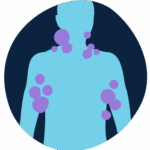
Hodgkin lymphoma is usually first found in the lymph nodes, where the abnormal cells can form lumps (known as tumours). The disease may affect one lymph node or several.
These cells can also travel through the bloodstream and spread to other parts of the lymphatic system, such as the:
- spleen
- liver
- bone marrow.
Make a lasting impact in Hodgkin lymphoma research by downloading the My Hodgkin My Health app and creating your account today!
Join the mission to understand the long-term consequences of treatments by contributing your valuable data on medical comorbidities and quality of life as a patient with Hodgkin lymphoma.
Symptoms of Hodgkin lymphoma
The most common symptoms of Hodgkin lymphoma are:
- painless swelling in the neck, armpit or groin
- fevers without an infection
- excessive sweating at night
- unexpected and unintentional weight loss
- tiredness for no reason
- itching skin or an unexplained rash
- breathlessness.



Causes of Hodgkin lymphoma
In most cases, we don’t know what causes Hodgkin lymphoma. Some factors that can increase your risk of developing Hodgkin lymphoma include:
- age, it’s more common in people in their 20s and 30s
- previous exposure to viral infections such as human immunodeficiency virus (HIV) or Epstein-Barr virus (EBV)
- a weakened immune system
- smoking
- family history of Hodgkin lymphoma
- previous diagnosis of non Hodgkin lymphoma.
Stages of Hodgkin lymphoma
There are 4 stages of Hodgkin lymphoma. Stage 1 and 2 are early-stage disease, and stage 3 and 4 are advanced disease.
Staging looks at where the lymphoma is in your body, including what organs it might be affecting. Lymphoma cells can travel anywhere in the body.
Stage 1
One lymph node area is affected, either above or below the diaphragm.
Stage 2
Two or more lymph node areas are affected on the same side of the diaphragm.
Stage 3
At least one lymph node area above and at least one lymph node area below the diaphragm are affected.
Stage 4
Lymphoma is in multiple nodes and has spread to other parts of the body (e.g. bones, lungs, liver).
The diaphragm is a thin, dome-shaped muscle that sits under your lungs and above your stomach.
Your disease stage is also given a letter:
- A means you have no B symptoms.
- B means you have B symptoms like fever, night sweats and unexplained weight loss.
- E is when the lymphoma has spread to one area or organ outside your lymph nodes.
- S stands for spleen. Meaning you have lymphoma in your spleen.
Types of Hodgkin lymphoma
There are 4 types of Hodgkin lymphoma:
- The most common type of Hodgkin lymphoma, especially in young adults and teenagers.
- Lymph nodes involved have scar tissue and nodules.
- It is very curable.
- The second most common type of Hodgkin lymphoma.
- This type is more common in males, children, older adults and people with human immunodeficiency virus (HIV).
- The lymph nodes involved have Reed-Sternberg cells present.
- This is a rare type of Hodgkin lymphoma.
- It is more common in males.
- Usually, it affects a few lymph nodes in the upper body.
- Generally, it is diagnosed early.
- It is considered very curable.
- This is the rarest type of Hodgkin lymphoma.
- It is more likely to occur in older adults and people with HIV and previous Epstein-Barr virus (EBV) infection.
- The lymph nodes involved have large numbers of Reed-Sternberg cells.
- It usually involves the lymph nodes in the abdomen, bone marrow, liver and spleen.
Nodular lymphocyte-predominant Hodgkin lymphoma (NLPHL)is now called nodular lymphocyte-predominant B-cell lymphoma (NLPBL) and is classified as a type of non Hodgkin lymphoma.
Diagnosis of Hodgkin lymphoma
Hodgkin lymphoma is diagnosed with a number of tests:
The best test to diagnose Hodgkin lymphoma is a biopsy. A biopsy is a procedure that involves taking a sample of tissue from a swollen lymph node or a lump and looking at it under the microscope.
These tests help your treatment team work out your stage and prognosis.
Other tests may include:
- medical history and physical exam
- blood tests – full blood count (FBC), kidney and liver function, electrolytes
- genetic tests
- computed tomography (CT) scan
- positron emission tomography (PET) scan
- bone marrow biopsy
- lumbar puncture
- magnetic resonance imaging (MRI).
Fertility and Hodgkin lymphoma
Treatments for Hodgkin lymphoma can affect fertility. For women some treatments can cause damage to the ovaries. For men it is possible to have low or abnormal sperm production. Your fertility may become normal again in the future, but it is difficult to predict.
It is important to ask your doctor about your risk of infertility as early as possible. There are some options for preserving fertility. But, decisions about what options might be right for you usually need to be made before you start treatment.
Visit our Fertility and blood cancer webpage for more information.
Treatments for Hodgkin lymphoma
Your haematologist will consider many factors when discussing a treatment plan with you, including:
- your subtype and stage
- your overall health
- your age
- whether the lymphoma is in your central nervous system (CNS)
- your wishes.
Treatment normally includes chemotherapy, immunotherapy, and steroids. A stem cell transplant may be an option for you if you have relapsed or hard to treat disease (known as refractory). Some people may also have radiotherapy.
Chemotherapy (also called chemo) is the most common treatment for Hodgkin lymphoma. Chemotherapy kills cancer cells and stops them from growing. It also damages healthy cells and causes side effects. There is information on chemotherapy side effects and how to manage them on our chemotherapy webpage.
The type of chemotherapy recommended will depend on your subtype of Hodgkin lymphoma, the treatment goal, your age, and medical history. Chemotherapy can be given in combination with targeted therapy.
Treatment plans for Hodgkin lymphoma are shortened to letters like ABVD. The letters represent the name of the medicines in that plan. Your haematologist will provide you with information on your plan, including when and how often you will have it.
There are several treatment plans for Hodgkin lymphoma. They can be found on the Cancer Institute NSW website.
Immunotherapy is a type of biological therapy. It uses the immune system to recognise cancer cells and destroy them. Your treatment team will give this to you via a drip into a vein (known as intravenous or IV).
Immunotherapy works by:
- stimulating the immune system to find and attack cancer cells
- removing barriers that are stopping the immune system killing cancer cells.
Pembrolizumab is a type of immunotherapy called an immune checkpoint inhibitor. It works by turning on your immune system to help your body fight cancer. Your treatment team may give you pembrolizumab if your Hodgkin lymphoma has relapsed or is difficult to treat.
It is usually given through a drip into a vein at a hospital or clinic. Common side effects include inflammation of the skin, gut, lungs, or liver. These are called immune-related adverse events (iRAEs). It is important to tell your treatment team if you have any side effects, as early intervention can help keep you safe.
Targeted therapy is a cancer treatment that finds and blocks the parts of cancer cells that help them grow and spread.
An antibody drug conjugate is a type of targeted therapy. It combines antibody therapy with chemotherapy to help destroy cancer cells.
Brentuximab vedotin is an antibody drug conjugate used to treat relapsed or refractory Hodgkin lymphoma. It targets a marker called CD30 on some lymphoma cells. It attaches to these cells and delivers chemotherapy into the cell to kill them.
It is usually given through a drip into a vein in a hospital or clinic. Common side effects include tiredness, nausea, and tingling or numbness in the hands and feet.
Radiation therapy, also called radiotherapy, is a type of treatment that:
- uses high energy x-rays to destroy cancer cells
- is a local therapy because it only destroys cancer cells in the area it treats.
It is often used to treat stage 1 and 2 disease, or after chemotherapy to destroy any remaining cancer cells.
A bone marrow or blood stem cell transplant is a treatment that restores stem cells after high dose chemotherapy. Your treatment team might suggest a transplant if your Hodgkin lymphoma is difficult to treat or has come back after a period of remission.
There are 2 types of transplants:
- An autologous stem cell transplant is when your own stem cells are collected and then given back to you after high dose chemotherapy.
- An allogeneic stem cell transplant is when you receive stem cells from a donor, often a blood relative.
It is more common to receive an autologous transplant for Hodgkin lymphoma. There are some situations where an allogeneic transplant may be recommended.
Survival rate for Hodgkin lymphoma
The survival rate of Hodgkin lymphoma is approximately 88%, 5 years from diagnosis. Survival rate is a population-based measure. Whereas your individual prognosis takes into account factors that can impact survival rate.
Your prognosis is estimated by your haematologist. It is a prediction of the likely course and outcome of your disease. The factors considered when discussing your prognosis include:
- your subtype and stage
- your overall health
- your age.
Your prognosis might change if your Hodgkin lymphoma comes back or does not respond to treatment.
Follow-up care for Hodgkin lymphoma
Follow up care for Hodgkin lymphoma includes regular checkups with your treatment team. This is to check for long term side effects. You will also have tests and scans to make sure the lymphoma hasn’t come back (relapsed/recurred). You will likely need more treatment if the lymphoma returns.
Living with Hodgkin lymphoma
How Hodgkin lymphoma affects your everyday life depends on many factors. It could be that you are returning or managing work, trying to exercise or managing your nutrition. There are some helpful resources and information to guide you on our living well with blood cancer webpage.
Caring for someone with Hodgkin lymphoma
We have a range of information and resources that may help when you are caring for someone with Hodgkin lymphoma.
Resources for Hodgkin lymphoma
Booklet to download:
-

Hodgkin lymphoma (HL) information booklet
pdf / 728.03 KB
Optimal Care Pathway for Hodgkin lymphoma
An Optimal Care Pathway for Hodgkin lymphoma has been developed in association with the Cancer Council, Australia and you can access it below.
Your Guide to Best Cancer Care – for Hodgkin and diffuse large B-cell lymphoma patients
A guide to help you, your family, and friends as you navigate through the healthcare system
References
- Fertility preservation for people with cancer clinical guidelines, Cancer Council
- Hodgkin lymphoma, eviQ
- Hodgkin lymphoma symptoms and causes, Mayo Clinic
- Hodgkin lymphoma | Causes, Symptoms & Treatments | Cancer Council
- Hodgkin lymphoma diagnosis and treatment, Mayo Clinic
- Hodgkin lymphoma, MSD Manual Professional Edition
- Hodgkin lymphoma, NCBI Bookshelf
- Hodgkin lymphoma diagnosis, Blood Cancer United
- Nodular lymphocyte predominant B-cell lymphoma (formerly NLPHL), Lymphoma Australia
- Pancytopenia as primary presentation of hodgkin’s lymphoma, Biomedical Journal of Scientific and Technical Research
- Histopathologic subtypes of Hodgkin lymphoma (WHO classification), MSD Manual Professional Edition
- Treatment options, Cancer Australia


