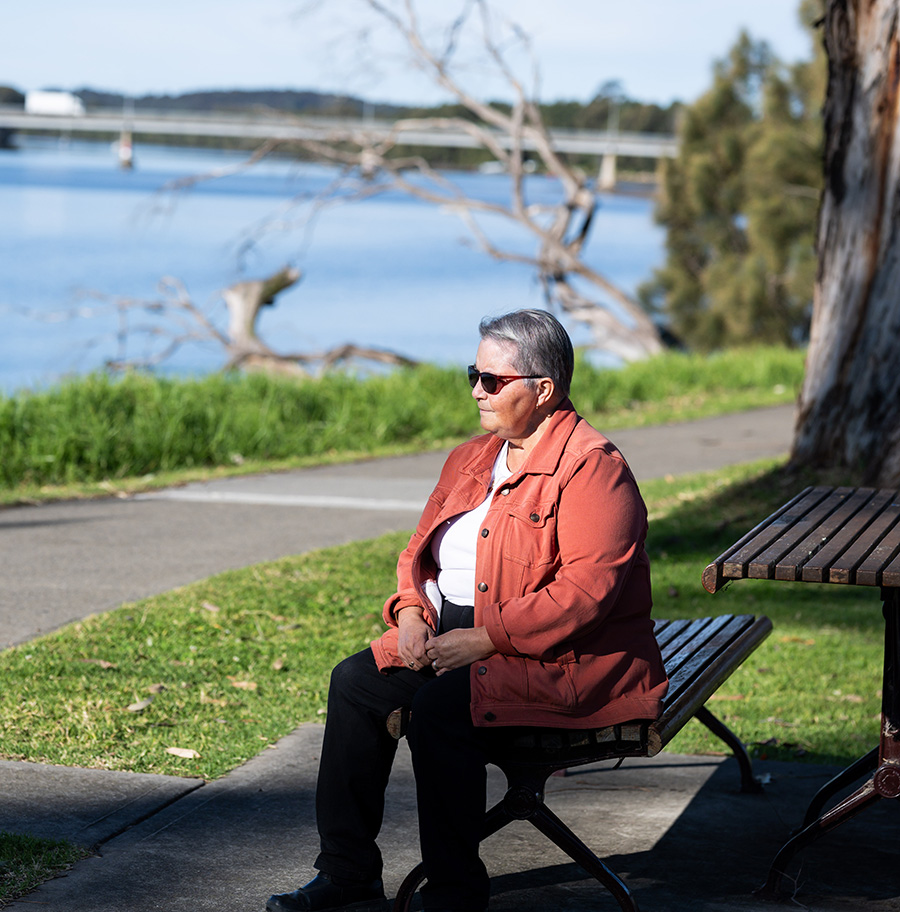
Back in 2010, Katrina Richards’ illness started innocently enough – as a burning itch that she thought might be caused by heat.

When the skin on her hands began to harden and split, the mother-of-four went to her doctor and embarked on a five-year quest for answers.
The 46-year-old was eventually sent to a dermatologist in Tamworth – two hours from her family home in Narrabri. Passed between doctors who struggled to find a diagnosis and with symptoms worsening, Katrina was admitted to hospital to find her organs had started to shut down.
“I had to give up work because my skin was in such bad shape,” she recalls. “I didn’t want to leave the house because I felt I looked like a freak. I became a hermit.”
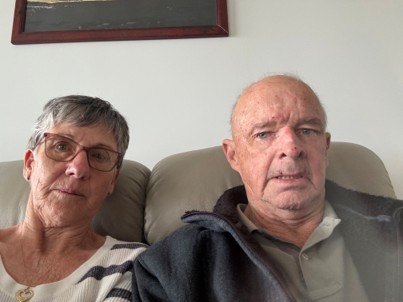
During this time of uncertainty, Katrina’s relationship with her partner, Steven, was also put under huge pressure.
“Our relationship had been 50/50,” says Katrina, “but suddenly Steven was having to do the cooking, cleaning, shopping and ironing, plus working and looking after kids. I was used to working full-time, raising four kids and still having a spotless home. Now I couldn’t get out of bed.”
Desperate for a diagnosis
Still with no clear answers after five years of ill health, Katrina continued to visit specialists, undergoing numerous tests and prescribed a variety of medications. She only got answers after a chance meeting with a rheumatologist whose wife had been researching the early stages of the type of blood cancer Katrina was eventually diagnosed with: stage four subcutaneous T-cell lymphoma.
“When I was diagnosed I was scared,” Katrina recalls, “because I thought, ‘If I’m at stage four, what hope have I got?’ I was also angry and frustrated. I didn’t understand how a skin problem could be caused by lymphoma, and I didn’t know how pathology had missed it for so long.”

With a clear diagnosis, Katrina had to urgently relocate 530 km from the family home to Sydney for treatment.
“It was a huge change for the family,” says Katrina. “For nine months I just wasn’t home, and there was no guarantee of me ever coming home. You feel isolated; you’re not part of your family’s life, even though you talk to them every day. You feel like your life stops and everyone else’s keeps going, because you don’t know what’s around the corner.”
The human cost of expensive drugs
Katrina’s delay in diagnosis was followed by an agonising six-month wait for a drug she needed but couldn’t afford – one that was eventually made available to her on compassionate grounds.
I used to lie in bed at night and imagine I could feel my body just multiplying these horrible little cancer cells,” recalls Katrina. “I’d think, ‘This is another day that I haven’t had any treatment,’ and I’d wonder, ‘The longer I wait, is this going to give me less of a chance of a good outcome?
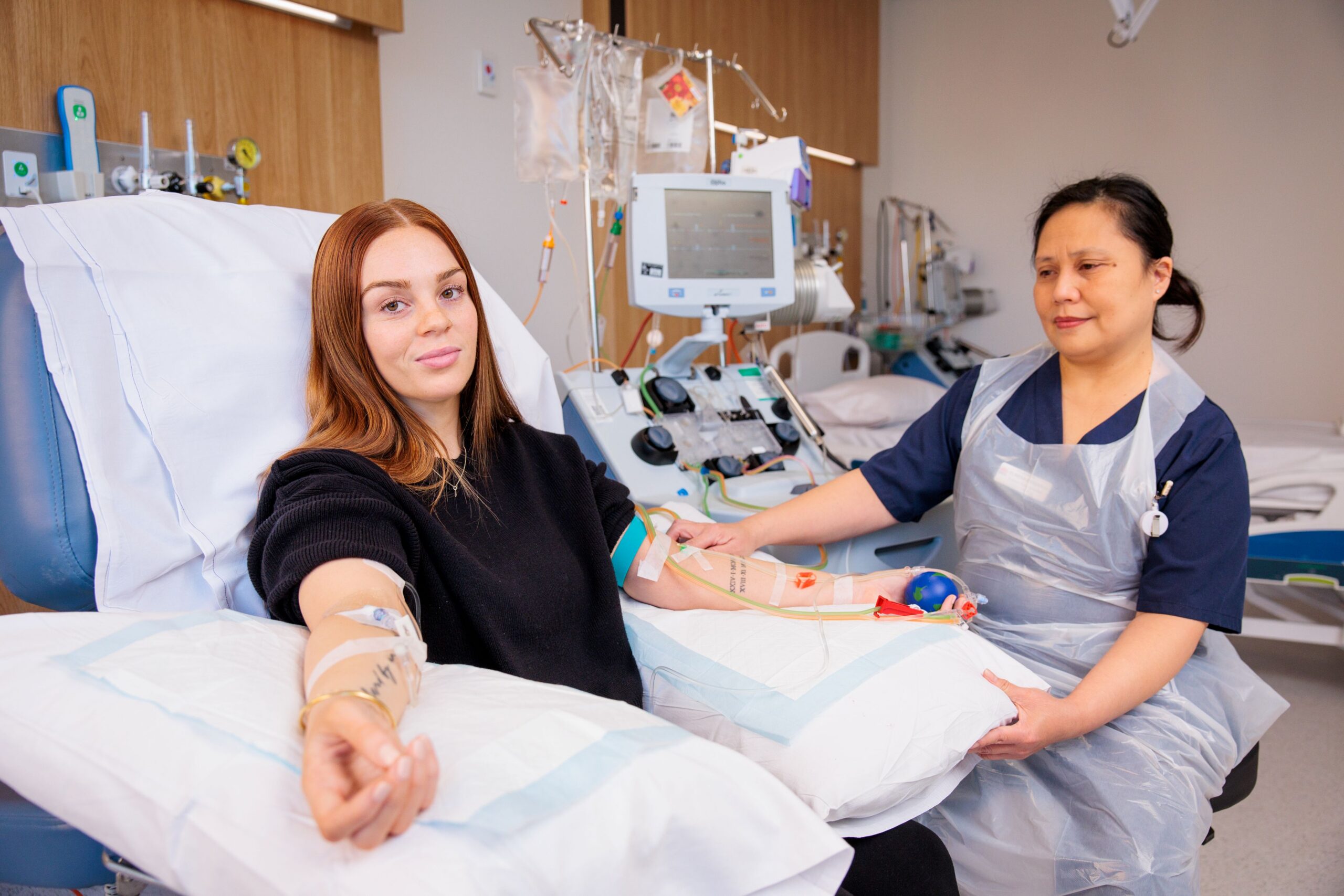
As part of her treatment, Katrina received a stem cell transplant – something that was made more difficult because she is of Indigenous descent, which can make it even more challenging to find a match. Eventually, Katrina achieved remission and was well enough to return to Narrabri. However, the couple still had to make a weekly, 12-hour round trip to hospital in Sydney – sometimes waiting four or five hours to see a doctor before starting the long drive home.
Advocating for the best blood cancer treatment
Now cancer-free, Katrina feels gratitude for every moment with her family. If the national standards set out in the Leukaemia Foundation’s Set the Standard campaign had existed when Katrina first attended her GP, Katrina may have been diagnosed sooner and had access to the best possible cancer treatment – something that drives her to advocate for the standards.
“It’s about time – it’s so needed,” she says. “If we had national standards, it would make a huge difference because some people pass away without a diagnosis. Blood cancer doesn’t care what gender you identify as, what race you are or how much money you have – it impacts all walks of life, and everyone has the right to good healthcare.”