Keeping a positive attitude and asking for help made all the difference for Em Meades during her blood cancer treatment. Along the way, she also discovered a love for chicken broth and Lego flowers. This is the third instalment of our four-part series where Em shares her story, in her own words.
Read part one and part two of Em’s story.
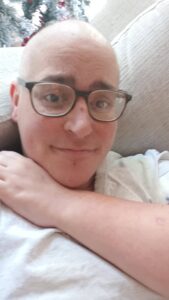
I’ve learnt some lessons throughout my cancer experience.
I got a little better at asking for help. My burden complex – always feeling like I am wasting people’s time and energy, and burdening them by existing – was really challenged. I had to ask for help from Ruth, my friends and family when I needed something.
The nurses spent a lot of time convincing me I didn’t need to apologise when I asked them for things, although I tried to do it as little as possible. I always felt so guilty when my meds were made more frequent or I had to buzz them after a vomit or when my pump was beeping or if I needed help changing. I was constantly attached to lines, so I couldn’t change my clothes without help.
These days, advocating for myself has become more of a strength.
The joy of chicken broth and Lego flowers
I’ve also developed an appreciation and love of chicken broth. That golden liquid was the greatest thing in the whole world when they let me start eating again as part of a clear liquids diet. All I’d had for weeks was water and some sneaky watermelon that the intensive care unit team had allowed.
Chicken broth burst onto my tastebuds like fireworks of joy. Around the same time, a nurse snuck me a glass of lemon cordial in the middle of the night when I was sad and hungry… it was the most delicious thing I’ve ever drunk and probably will ever drink.
I’ve also learnt I’m pretty resilient. My “I can’t control what I can’t control” philosophy got me through a really shit time in a fairly positive frame of mind. I’m also reasonably confident I could now do a successful, by the book, peripherally inserted central catheter (PICC) line dressing change.
I also have tips for anyone going into hospital for extended stays or treatment:
- Get a Nintendo Switch. Once you are through the dying-so-sleeping-24/7 stage, they are great because they don’t require the brain power and concentration of reading, but they do provide easy escapism. Mine’s just a Lite, but it’s been my best friend this past year. If you want to give someone a gift when they’re in hospital and they have a Nintendo, vouchers and games are awesome.
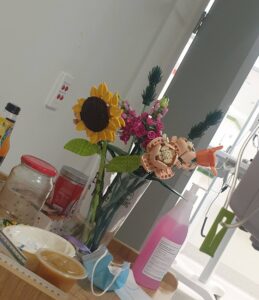
- Haematology wards = no flowers. So Lego flowers are genuinely a really great option. It’s an activity and something nice to look at. Pictures and art also help make a room feel like home.
- For those with anatomy like mine, Bond’s crop tops are the best. They’re comfy and not like wearing a bra, and also give you some dignity when needing help to get changed, e.g. having ECGs, scans, X-rays, lines put in and out, etc. You also don’t have to worry about any metal from underwires.
- Take your own pillows and have a blanket that is yours. Honestly, this was a game changer for me. When I could finally bring in my own bedding, my entire mood lifted tenfold.
- Nurses need snacks. They don’t get enough love and appreciation, and they work stupid long shifts, more often than is okay. These are often back-to-back shifts. Feed them if you can. We had someone in our lives who contributed by sending money for my nurses to be stocked with snacks regularly. They often told us how game changing this was for their shifts. Feed your nurses.
Immense gratitude and feeling like a “new me”
I went into remission in March 2024 and my specialist, Dr The, says my chances of relapse are reasonably low because of my markers and the oral chemo I’m taking. It’s not zero (or close to it) but I’m in the best spot I could be and that’s amazing. I still have the possibility of a transplant up my sleeve, if needed. What an incredible thing modern medicine is!
Cancer can impact your life well after treatment. Learn more about what cancer care looks like after hospital.
I’ve also completed a rehabilitation program, which was genuinely life changing. Over nine weeks, my energy levels and strength increased significantly. The other day I did the Hanging Rock summit walk when I couldn’t even consider a full walk around the block three months ago. I’m playing cricket again and feel like a new me. And, finally, I am also an Aunt now. My brother Darcy and his partner Sarah have brought my gorgeous niece into the world.
Oh. And my hair. It’s come back y’all, with a mop-like vengeance.
I just hit the six-month milestone for my oral chemo, so (in theory) I only have six months to go (and I am DEFINITELY counting down)! I had an appointment with my haematologist today and all my counts are still good. I have a six-month bone marrow biopsy booked for early December to make sure my marrow is behaving as well. Overall, things are good.
A huge shout out to the Leukaemia Foundation who provided transport support for me to get to and from my appointments and rehab, a counsellor and emotional support for Ruth, and a recovery coach and access to online resources and programs for me.
Our cancer care services for families like Em’s are only possible with the support and donations from the community. Find out how you can help.
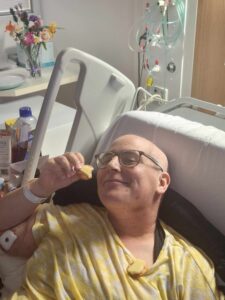
If you want to help people living with blood cancer there are two practical things you can do:
- Sign up to be a stem cell/bone marrow donor with Stem Cell Donors Australia. You can also sign up when you donate blood.
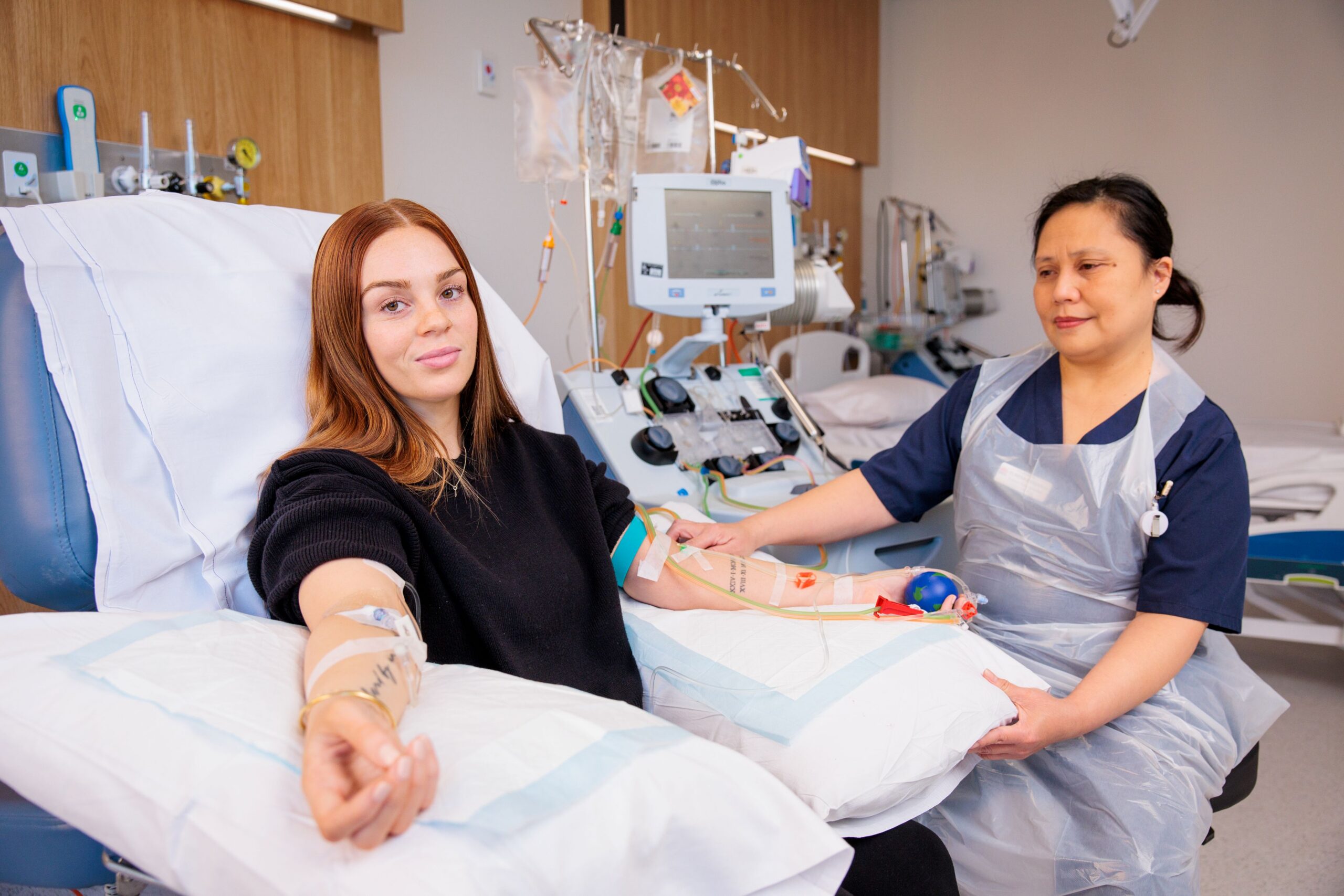
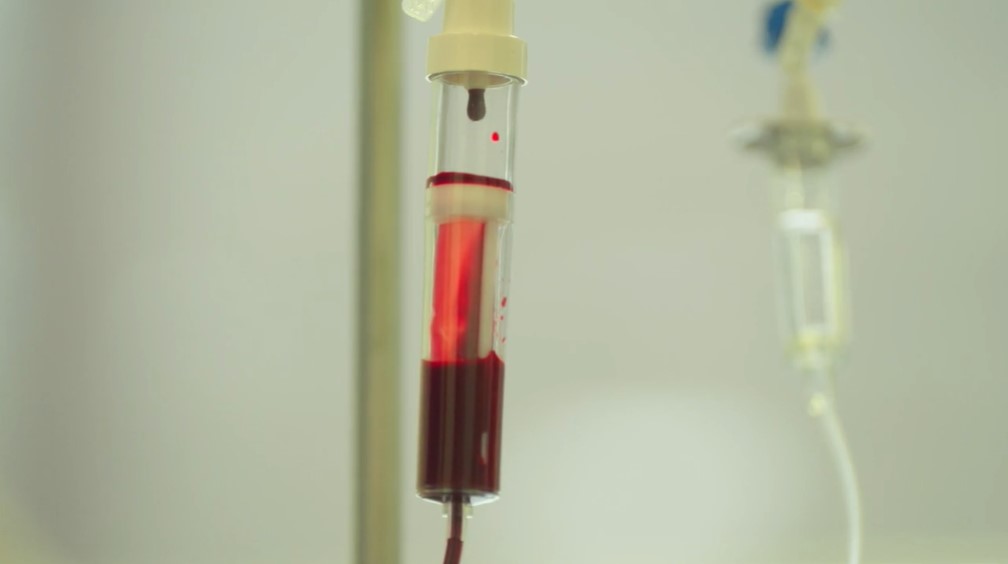
- Donate blood products if you can. I had hundreds of transfusions over the six months of all sorts of blood products – blood, platelets, albumin. The blood banks are constantly under strain and every donation helps save a life. You can find your closest donor center and book an appointment here.
Relapse chance is high in the first 12-18 months post-treatment and medium in the first five years. However, I am stoked to be living life again and I am so grateful for the people and community around us.
This is an excerpt from Em’s personal blog and was initially published on 16 November 2024. Read part four of her story.